


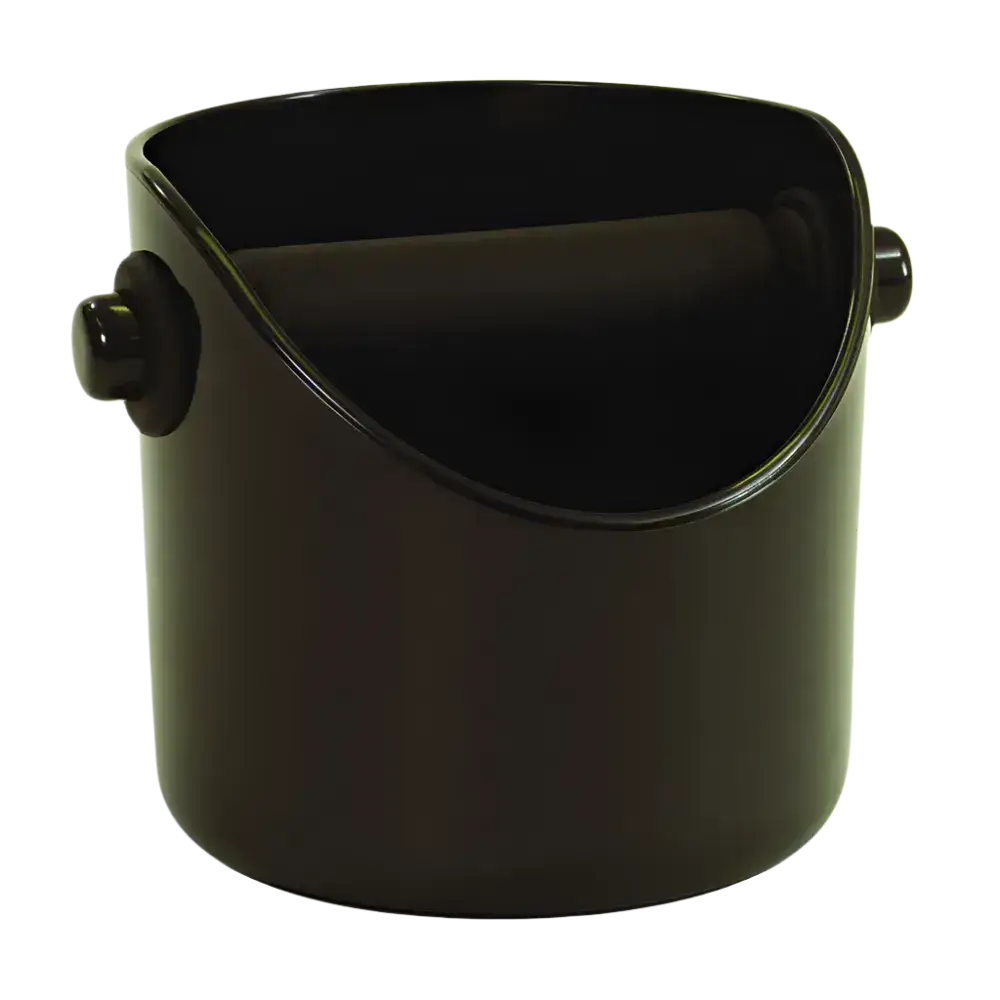


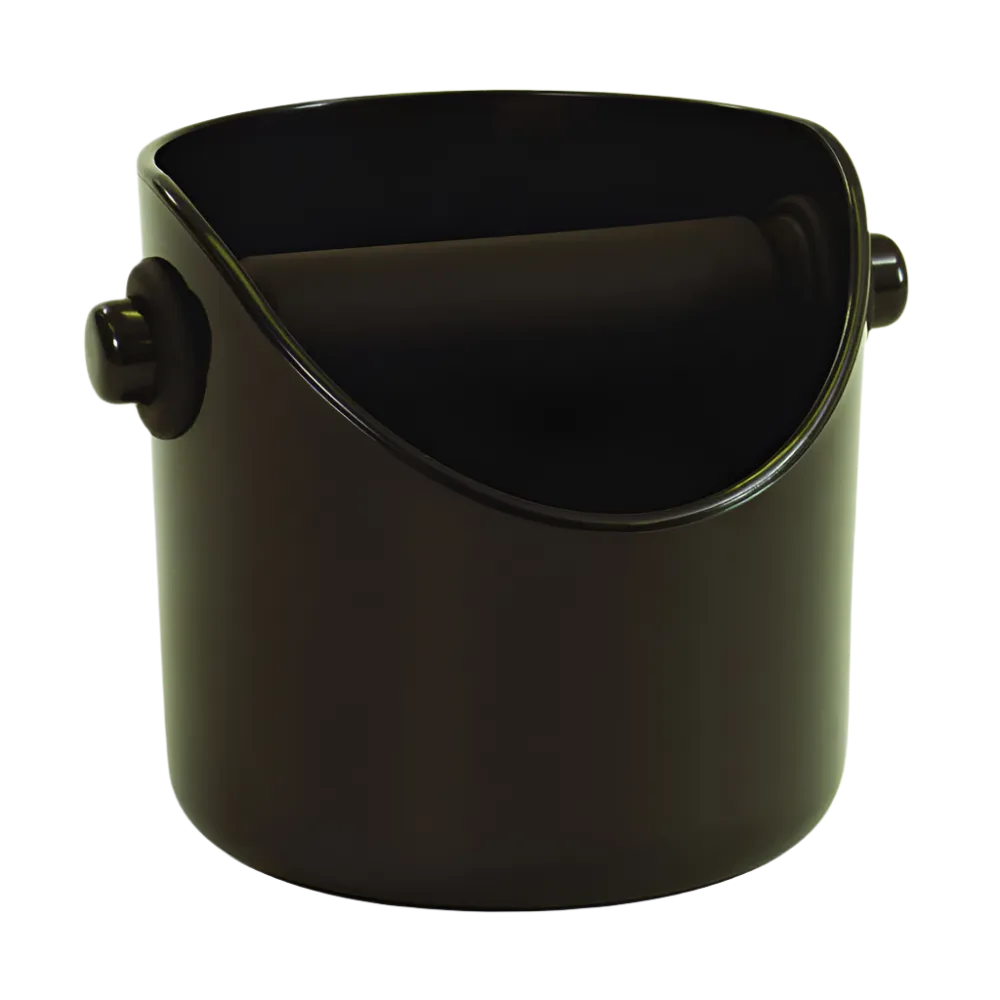
Grindenstein Coffee Knock Box Big
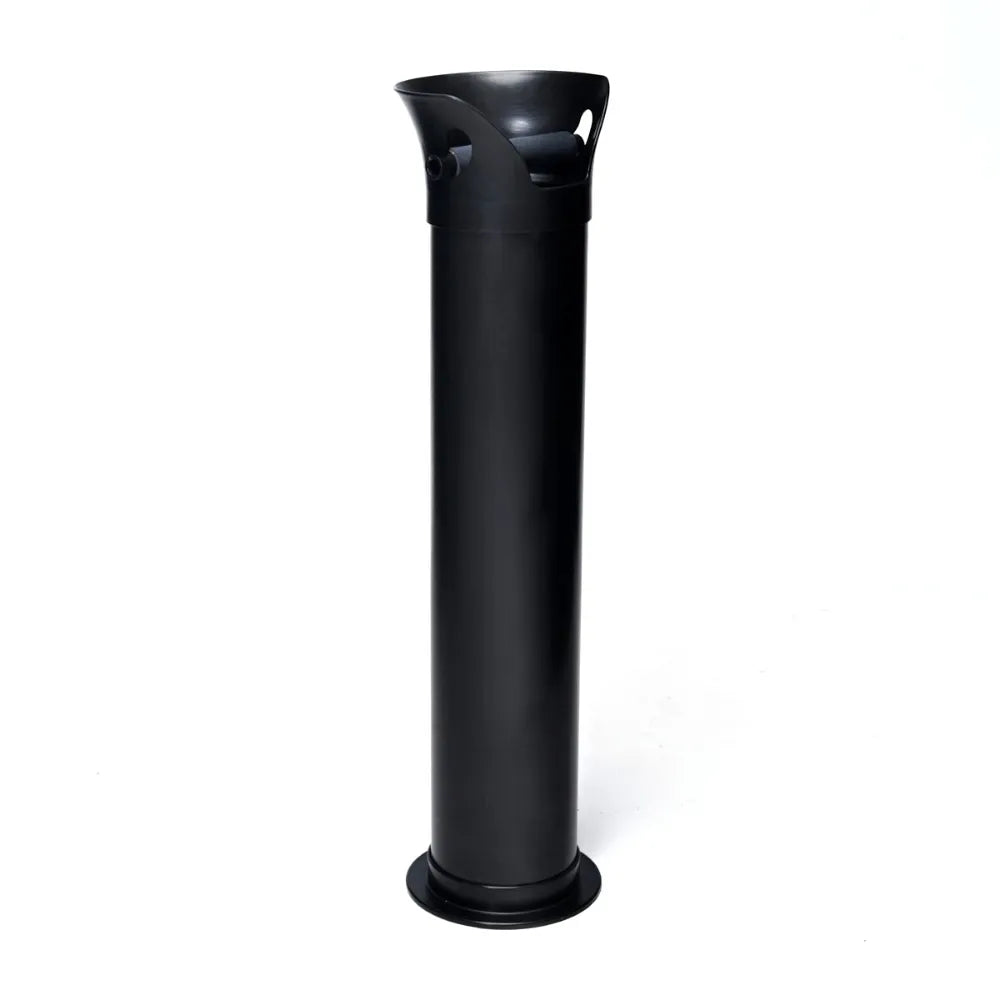
Lelit Knock Box Drawer - PLA360M

How to choose a coffee knock box
A knock box is where your used espresso pucks go: you tap the portafilter on a padded bar and the puck drops into the bin below. Three questions narrow the choice. How many shots do you pull before you empty it? Where will it sit: on the bench, under your grinder or on the floor? And do you want it to match your machine? Answer those and the right knock box is usually obvious.
Compact knock boxes for home espresso
If you make a few coffees a day and bench space is tight, start with the Grindenstein Coffee Knock Box. Dreamfarm, the maker of Grindenstein, says it holds 6 to 8 pucks, and it is designed to be stored on your machine's drip tray, under the group head, when you aren't using it. It weighs 0.24 kg, comes in three colours, and the bar is a solid steel core inside a thick rubber sleeve that absorbs the knock and protects your portafilter. Choose the Grindenstein Big if you pull more shots between empties. It has a larger footprint, and Dreamfarm only describes drip-tray storage for the standard size, so plan a spot on the bench for the Big.
Stainless steel knock boxes
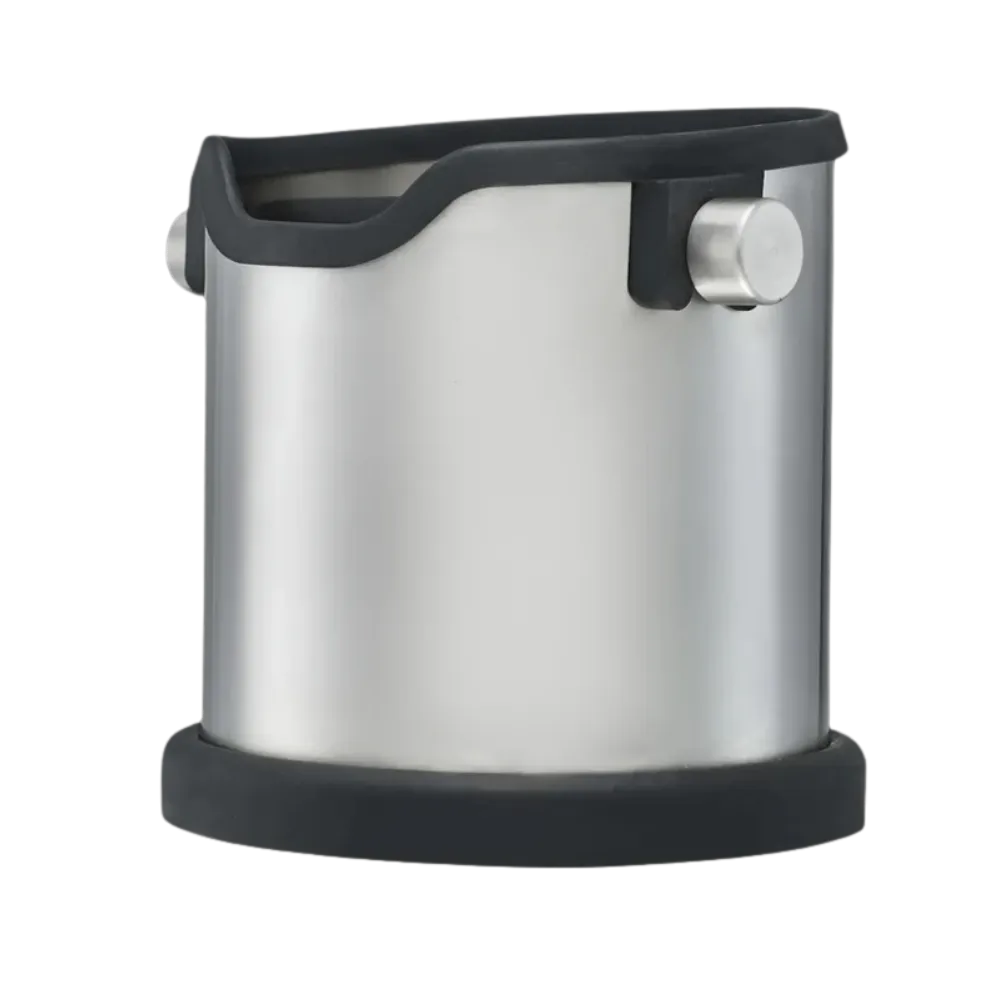
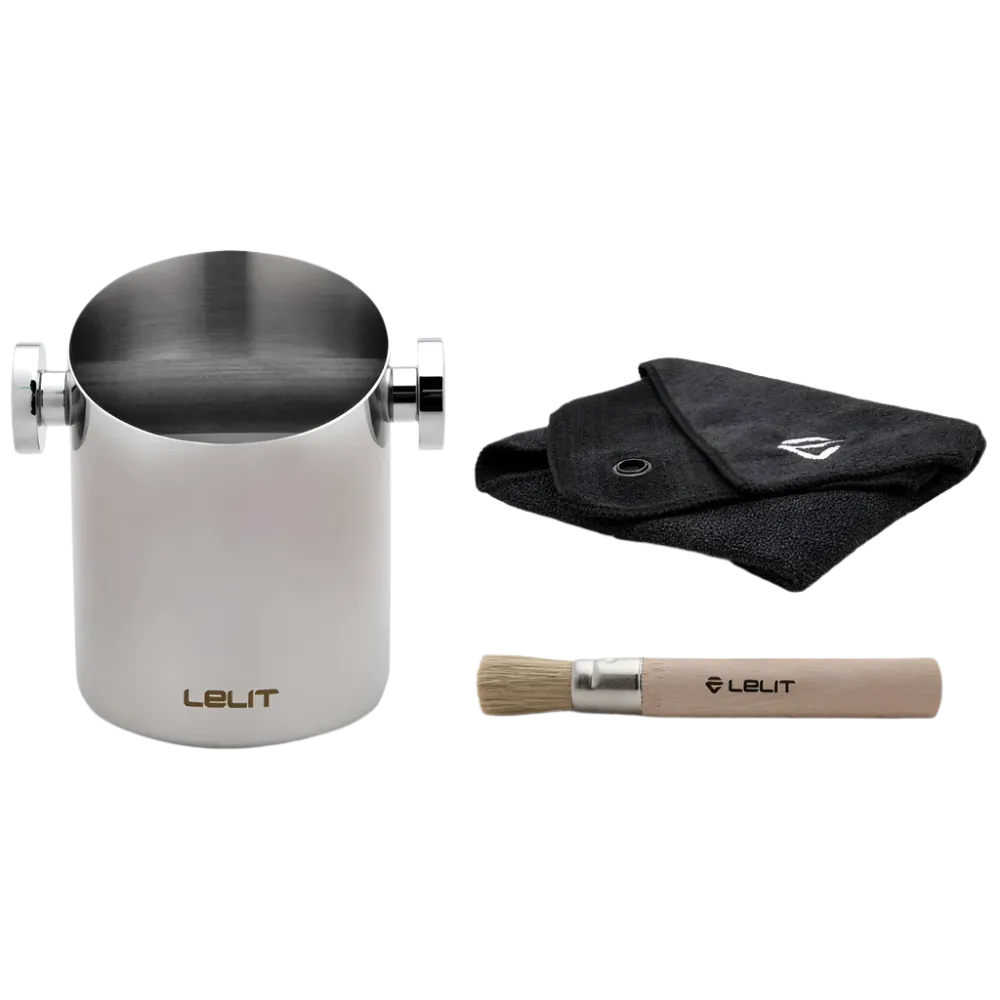
Choose stainless steel if you want your knock box to match a steel espresso machine. The Lelit PLA360S knock bin is a small brushed stainless cylinder, made in Italy, weighing 800 g, with a rubber-coated bar and a non-slip base. Lelit rates it at 10 pucks of 14 g, and it comes with a microfibre cloth and a cleaning brush. The Rhino stainless steel knock box is the bigger box at 170 mm square and 165 mm high, with a non-slip silicone base and a rubber knock bar that lifts out for cleaning. Rhino Coffee Gear pitches it at busy home benches and small cafés. If you own a Rocket, the Rocket Knock Box is made in Italy from mirror-finished stainless steel on a non-slip rubber base, designed to sit beside your Rocket espresso machine.
Knock box drawers that sit under your grinder
A drawer turns the space under your grinder into the knock box, so nothing extra sits on the bench. Measure your grinder's footprint against the drawer before you order.
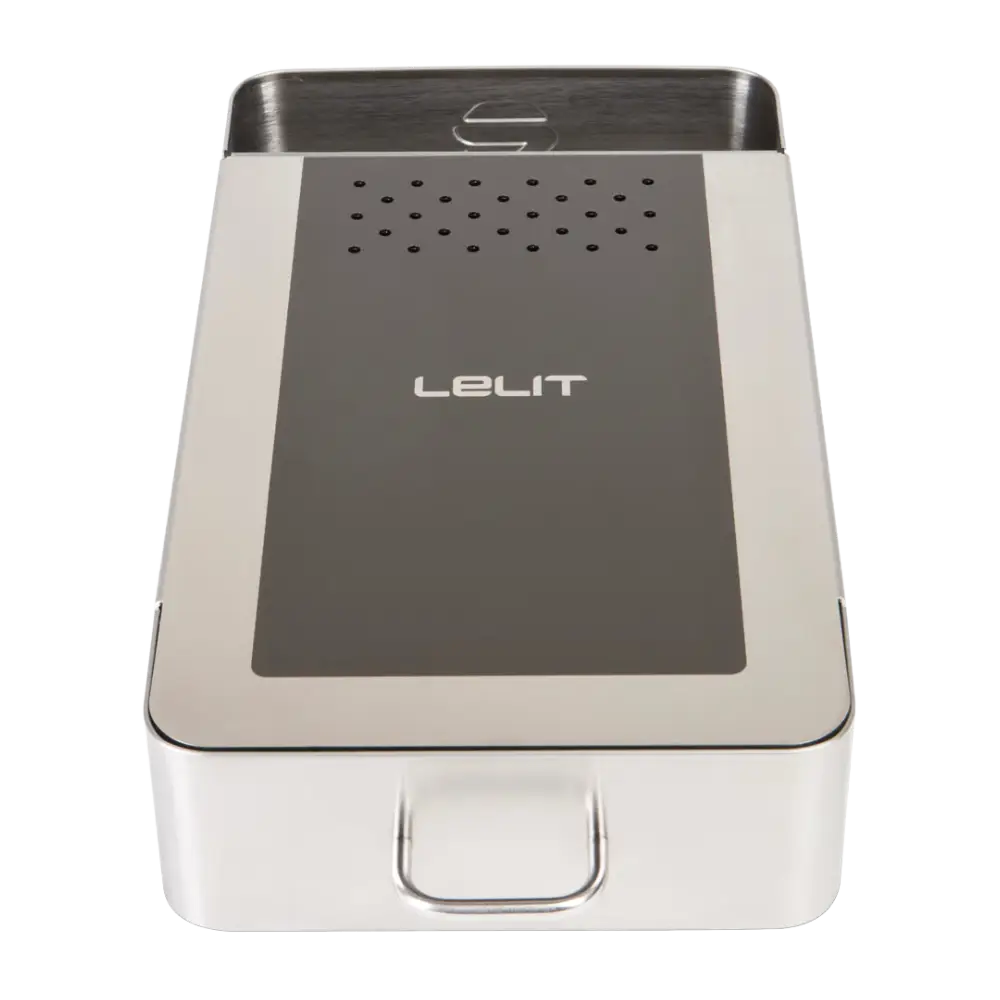
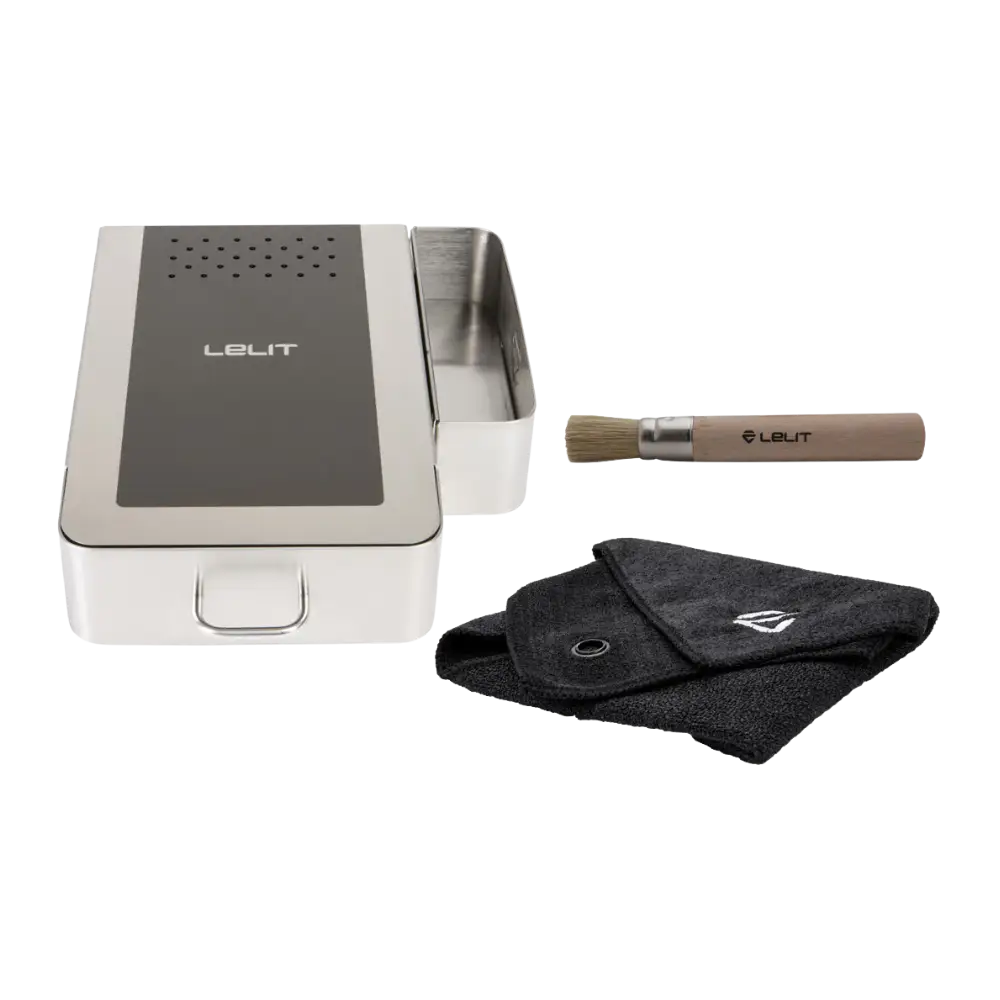
- Lelit PLA360M knock box drawer: 200 mm wide, 390 mm deep and 78 mm high, and Lelit says it can serve as a base for all Lelit grinders. It holds up to 70 pucks of 14 g, has holes in the top to prevent condensation, a dishwasher-safe inner drawer, and a magnetic storage compartment that anchors to the side or the back. A brush and microfibre cloth are included.
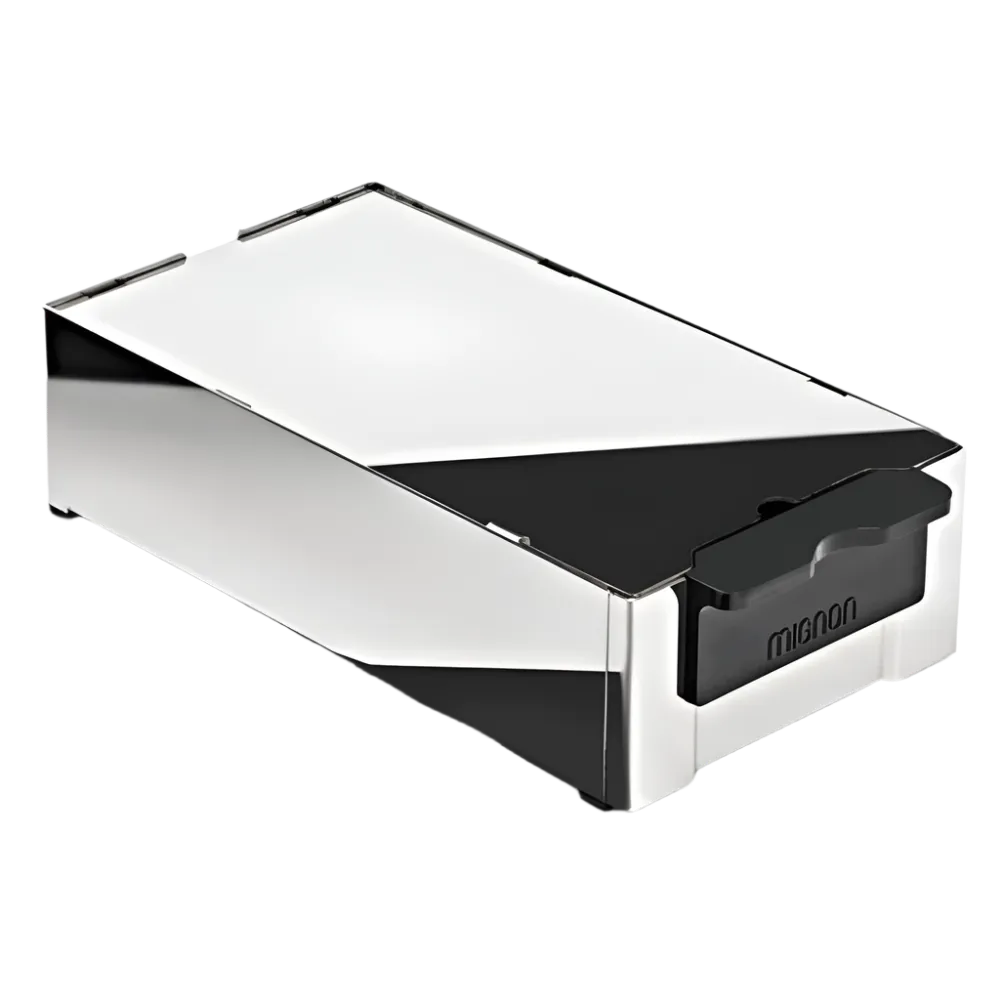
- Eureka Mignon knock box drawer: stainless steel, 123 mm wide, 241 mm deep and 63 mm high, made for every Eureka Mignon model. The handle is shaped so the drawer doubles as a tamping station for any portafilter, the knock bar is made from a sound-absorbing material to keep it quiet, and the top surface lifts off for cleaning.
Knockout tubes for cafés
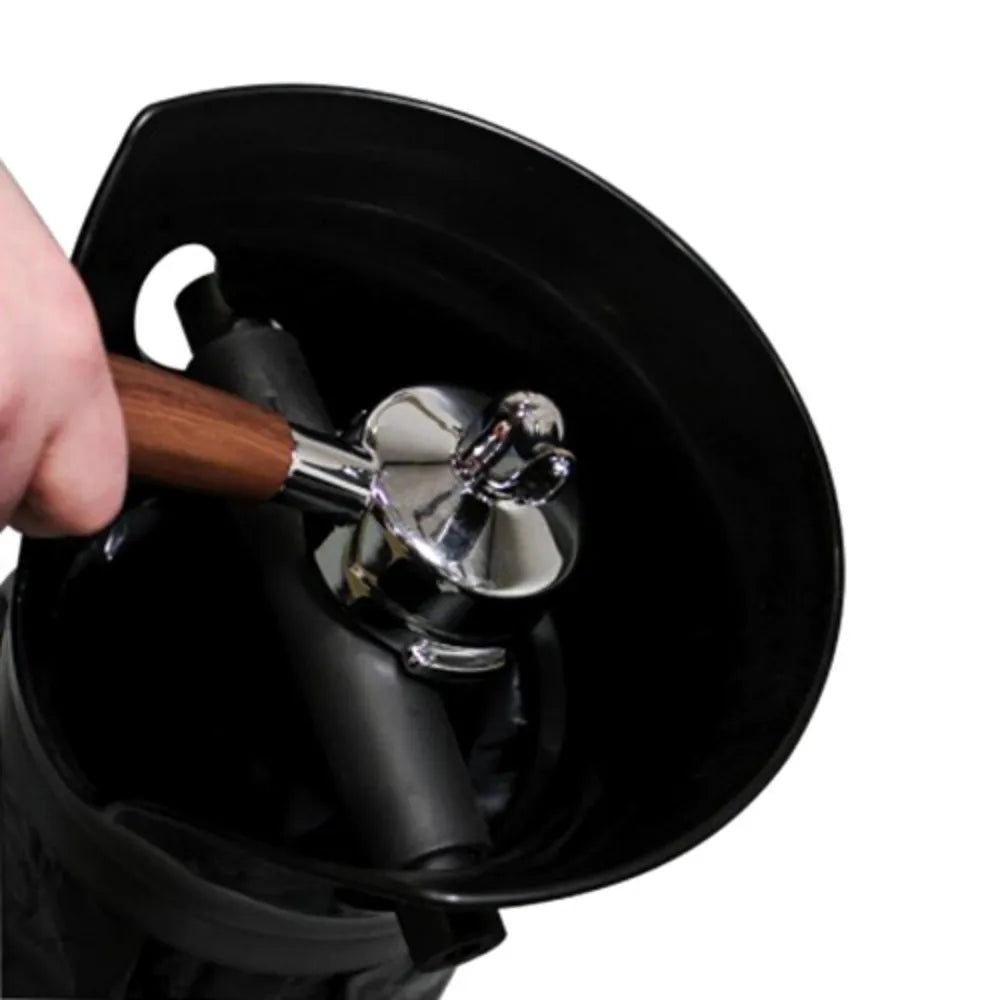
If a knock box fills up several times a shift, move to a floor-standing knockout tube. The Rhino Thumpa 860 stands 860 mm tall, with a 160 mm tube, a 225 mm flared collar that catches splatter and a 220 mm base, and it weighs 10 kg. It is made from high-density, shock-resistant polyethylene, built to be hit, bashed and dropped. The slotted knock bar pulls out for cleaning, the top lifts off for emptying or for use with a liner, and every part can be replaced. The tube can also be dismantled and cut down if you want a different height.
Looking after your knock box
Empty your knock box at the end of each day so wet grounds don't sit overnight, and wipe the bar while you're at it. Then check the care rules for your model: the standard Grindenstein goes in the top rack of the dishwasher, the Rhino stainless box is dishwasher safe, the Lelit PLA360M's inner drawer is dishwasher safe, and every part of the Eureka drawer is too. If you refit the rubber sleeve on a Thumpa's rod, Rhino says not to bang the two together: rub on a little olive oil or another food-grade lubricant first. And don't waste the grounds: every Grindenstein comes with a booklet on using them as a natural fertiliser in the garden.
Delivery and advice
Orders over $200 ship free Australia-wide, and delivery under $200 is a flat $9.95. In-stock orders placed before 3pm Melbourne time are dispatched the same day. Not sure what suits your machine? Call or email us with the model and we'll help.
FAQs
Do I need a knock box for my espresso machine?
You can manage without one, but you'll be carrying a dripping portafilter to the bin after every shot. A knock box puts a padded bar right beside the machine, so one firm tap empties the basket and the grounds stay out of the sink. The rubber-covered bars on the Grindenstein, Lelit and Rhino boxes are there to absorb the knock and protect your portafilter. If you make one or two coffees a day, a compact box is enough. Pull more than that, or share the machine, and a larger box or a drawer saves you emptying it as often.
How many coffee pucks does a knock box hold?
Only some makers publish a figure. Dreamfarm says the standard Grindenstein holds 6 to 8 pucks. Lelit rates its PLA360S knock bin at 10 pucks and its PLA360M drawer at up to 70, both counted as pucks of 14 g, so if you dose more than that per shot, expect to fit fewer. Rhino, Rocket and Eureka don't give a puck count for their boxes and drawers, so compare them by size instead: the Rhino stainless box is 170 mm square and 165 mm high, and the Eureka drawer is 123 mm wide and 241 mm deep.
What is a knockout tube?
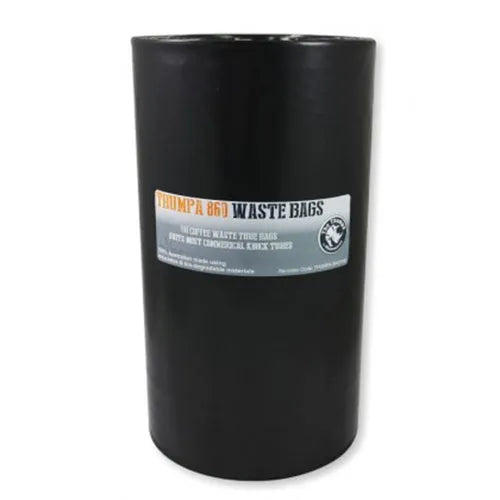
A knockout tube is a tall, floor-standing knock box for cafés. Instead of filling a small bin on the bench, the pucks drop down the tube, so it takes far more before it needs emptying. The Rhino Thumpa 860 is 860 mm tall and stands on the floor beside your machine. You can use it bare, or lift off the top and fit a liner: the Thumpa 860 biodegradable liners come on a roll of 100, are made to fit the 860, and lift straight out of the tube when full, which makes emptying quicker and cleaner.
Why is the liner hard to pull out of my Thumpa?
A very full liner of wet grounds can create a vacuum underneath it, so the bag seems stuck to the bottom of the tube. Rhino gives two fixes. You can drill a couple of holes in the base of the tube so a vacuum can't form. Or, when you empty it, tie the top of the bag in a knot and lay the whole tube on the floor: the grounds settle to one side, the vacuum eases and the bag slides out. Rhino points out the second method is also easier on the barista's back than lifting a full bag straight up.
Will a knock box drawer fit under my grinder?
Each maker only states its own grinders. Eureka says its Mignon drawer suits every Eureka Mignon model, and Lelit says the PLA360M can serve as a base for all Lelit grinders. For any other grinder, measure its footprint and feet and compare them with the drawer: the Eureka drawer is 123 mm wide and 241 mm deep, and the Lelit is 200 mm wide and 390 mm deep. Remember the drawer also raises your grinder by its height, 63 mm for the Eureka and 78 mm for the Lelit, so check the clearance under your cupboards too.
How do I save bench space with a knock box?
Choose one that stores out of the way. The standard Grindenstein is designed to sit on your machine's drip tray, under the group head, when you aren't using it, so it only takes bench space while you're making coffee. A grinder drawer from Lelit or Eureka uses space your grinder already occupies, and the Eureka drawer also works as a tamping station, which saves you a separate stand. In a café, a floor-standing knockout tube such as the Thumpa 860 takes the bin off the bench altogether and frees the counter for cups and milk jugs.