







How to choose a coffee scale for espresso
A coffee scale turns one good shot into one you can repeat. Weigh the coffee going into the basket and the espresso coming out, time the shot, and when a coffee tastes sour or bitter you can change one thing, usually the grind, instead of guessing. Choose a scale by where it sits and whether it should time the shot, then decide whether a dosing cup would tidy up your grinding.
Bench scale or smart scale with a timer
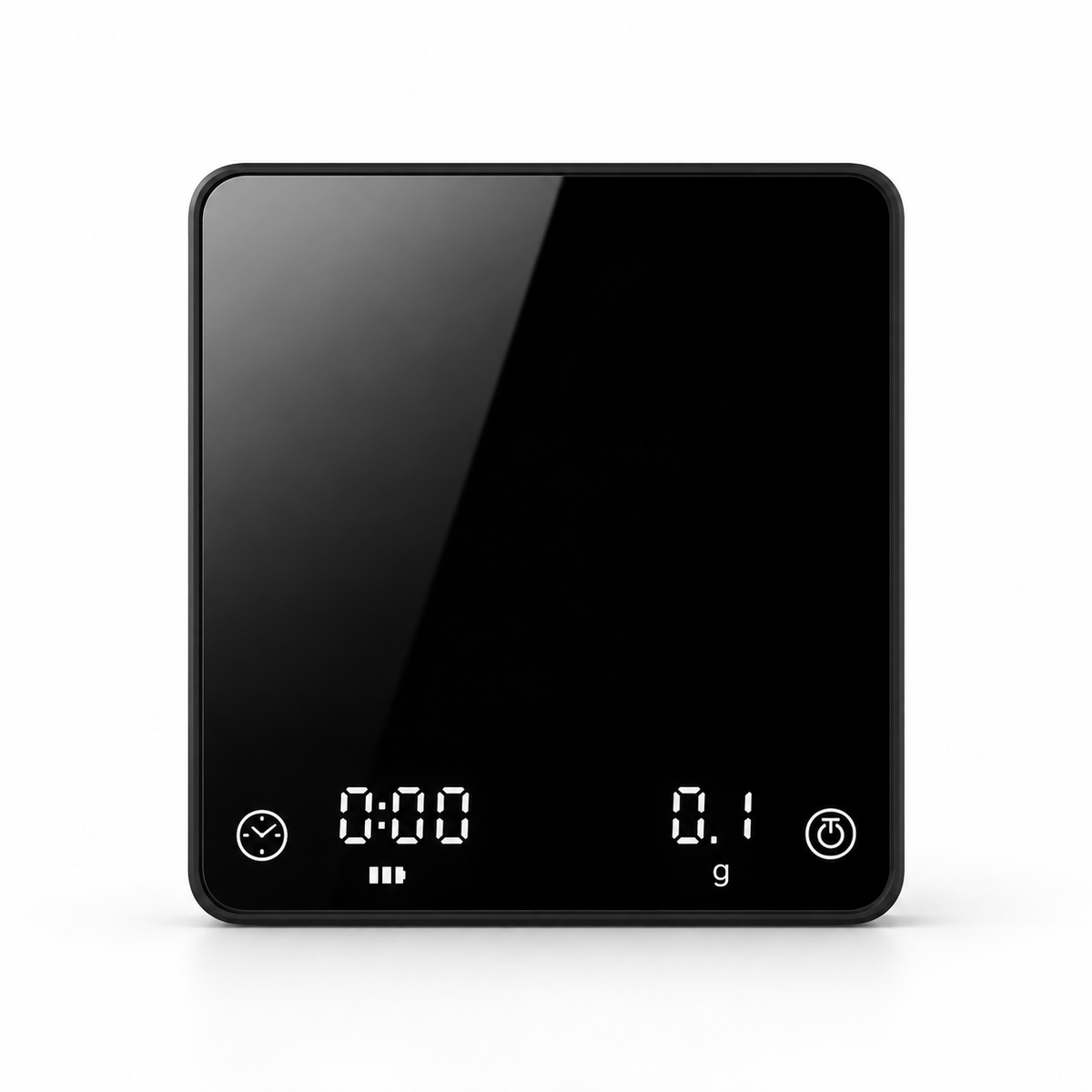
The Coffee Gear Bench Scale is the simple, sturdy choice. Its 150 mm x 158 mm stainless steel platform holds a portafilter flat and level, it weighs up to 2000 g in 0.1 g steps, and it runs on a 9V battery that comes in the box. It has tare, selectable auto-off and overload protection but no timer, so it suits weighing doses and beans rather than timing shots.
The two Matrix scales weigh and time. Each has an espresso mode, a ratio mode and an LED bar showing how fast liquid lands on the scale, and both read to 0.1 g and charge over USB-C.
Pocket or full size: measure your drip tray first
Measure your drip tray and the gap under the spouts first, because the scale uses up some of that height.
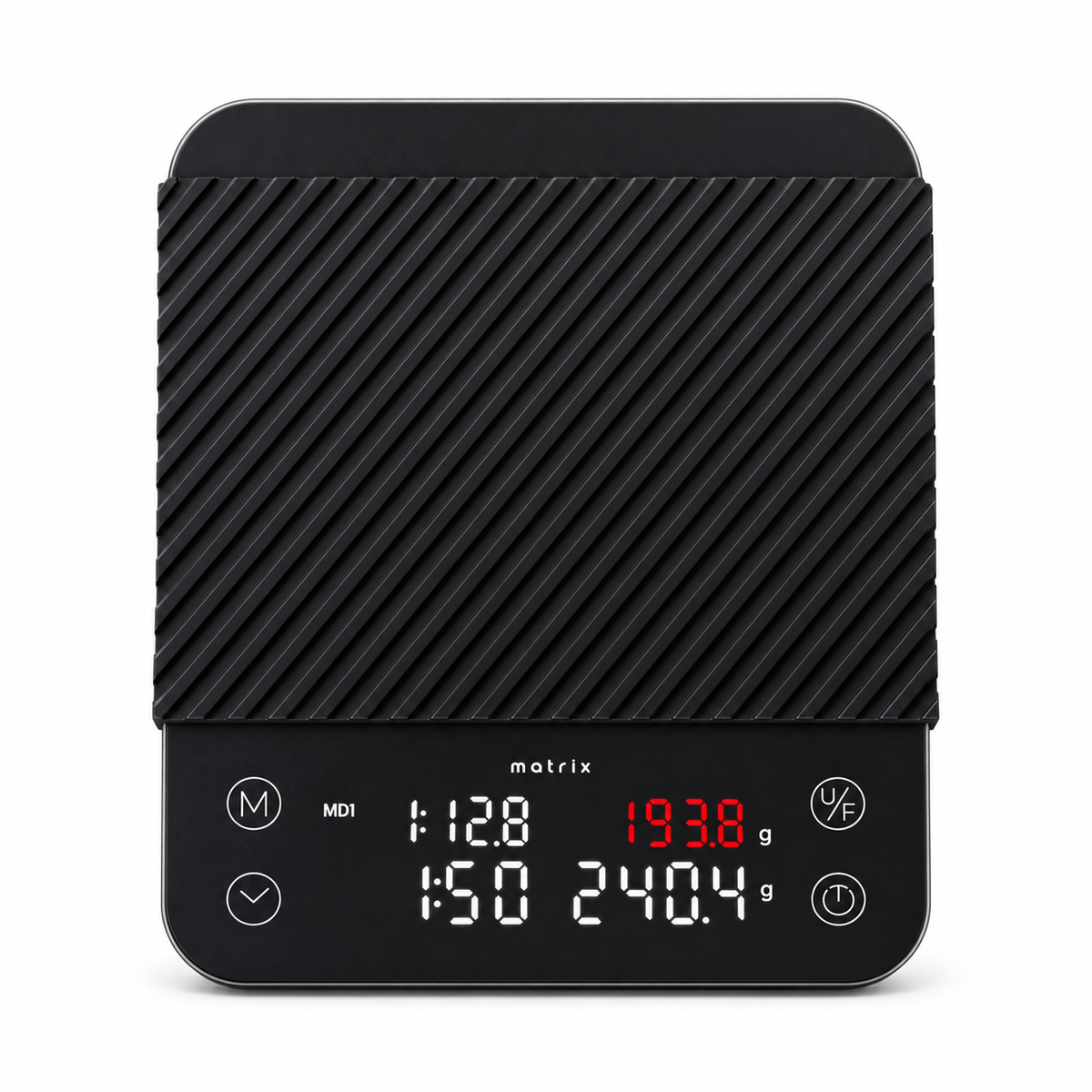
- Matrix G1 FlowBar Smart Pocket Coffee Scale: 87 x 92 mm and just 10.3 mm thin, about 160 g, with a tempered glass top on a metal body. It weighs from 0.3 g to 2000 g and has three modes: auto timer, dose-to-water ratio and espresso. Choose it for a compact drip tray, or to pack in a travel or pour-over kit.
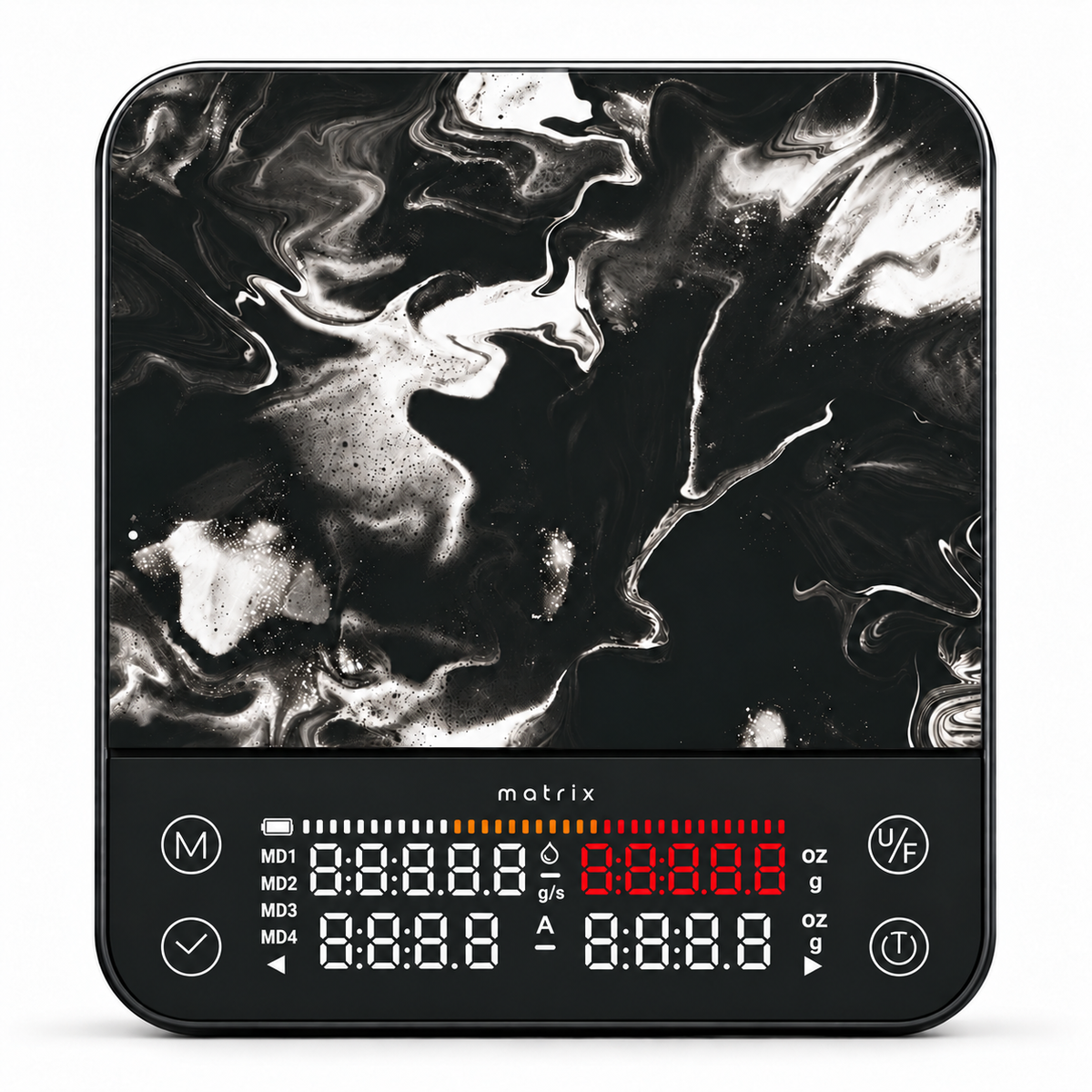
- Matrix M2 Pro AI Master Coffee Scale: 130 x 150 x 23.5 mm and about 310 g, weighing from 0.4 g to 3000 g. It has five modes, a two-row display and a green, yellow and red flow-rate bar. Choose it if you have the room and brew filter coffee as well as espresso.
Timing an espresso shot
In espresso mode you tare the cup and start the shot. The Matrix timer starts by itself when espresso begins to flow, and on the M2 Pro it also stops when the flow ends. Matrix suggests starting near a 1:2 ratio, for example 18 g of ground coffee in and 36 g of espresso out in roughly 25 to 30 seconds, then adjusting the grind one step at a time. A finely adjustable grinder from our coffee grinders makes that easy.
Scales for pour-over and filter coffee
Both Matrix scales have a ratio mode that shows the water weight and the live ratio, such as 1:15, as you pour, and the G1's auto timer starts when water hits the grounds. The M2 Pro adds a segmented pour mode for pulse pouring and recipes like the 4:6 Kasuya method, and shows the weight of brewed coffee when you lift the dripper off. Drippers and filters are in pour-over and drip coffee makers.
Dosing cups: plain steel or a built-in scale
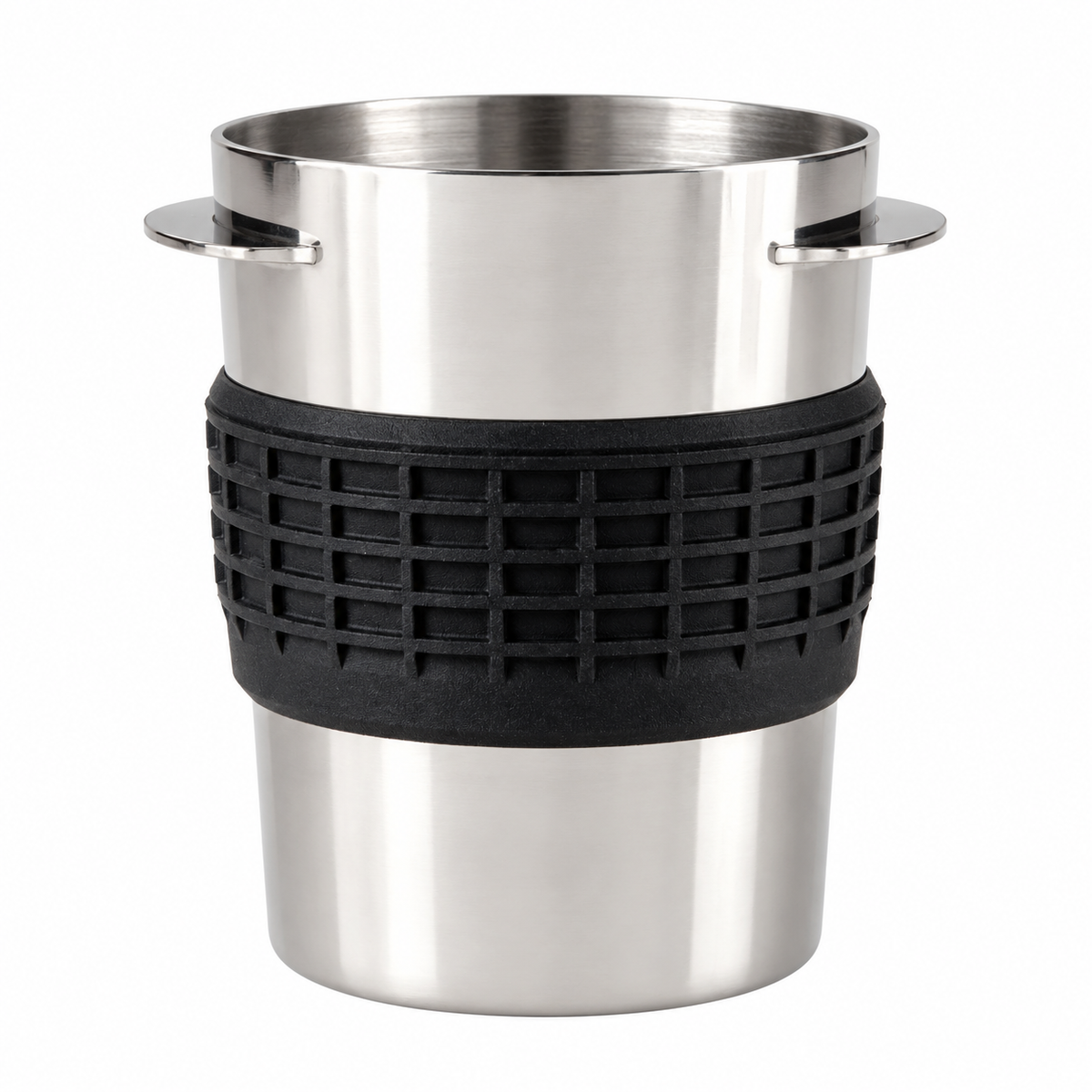
A dosing cup catches grounds from the grinder. Put the portafilter upside down over the cup, flip both together, and tap the portafilter on the bench so the grounds settle evenly. Both cups here are listed for 58 mm portafilters.
- Barista Progear Dosing Cup: stainless steel with a rubber grip, and Barista Progear lists it as compatible with the Mahlkönig EK43. Choose it if you already own a scale: tare the cup, grind, check the dose and correct it before it goes in the basket.
- Bruer Scale Dosing Cup: the scale is built into the cup, so you weigh beans or grounds in the cup itself. It reads in grams to 0.1 g up to 99.9 g, holds up to 500 g, and has tare and auto shut-off. The 500 mAh battery charges by USB-C, with the cable included but not the wall adapter. See more from Bruer.
Setting up and looking after a scale
Coffee Gear advises using the bench scale on a flat, level surface away from other electronic equipment, and its stainless steel platform wipes clean. Wipe the G1's glass top with a soft, damp cloth and never submerge it. Both Matrix scales come with silicone pads, and the M2 Pro adds a diatomaceous earth absorbent pad.
Delivery and advice
Orders over $200 ship free Australia-wide, and delivery under $200 is a flat $9.95. In-stock orders placed before 3pm Melbourne time are dispatched the same day. Not sure what suits your machine? Call or email us with the model and we'll help.
FAQs
Do I need a coffee scale for espresso?
You can make espresso without one, but a scale is the quickest way to make it consistent. Espresso recipes are given in grams, such as 18 g in and 36 g out, and a scale that reads to 0.1 g lets you hit them every time. It also shows you what changed when a shot tastes different: if the dose and yield match yesterday's, the grind or the beans are the variable. Any scale here reads to 0.1 g, and the Matrix scales also time the shot, so you don't have to watch a separate clock.
Can I weigh coffee beans before grinding?
Yes, and it's one of the jobs Barista Progear designed its dosing cup for. Weigh the whole beans in the cup, grind them, then weigh the grounds that come out. If the second reading is lower, some coffee stayed behind in the grinder, which is worth knowing before you change your recipe. Weighing beans first also means you only grind what you need. With the Bruer Scale Dosing Cup both weighings happen in the cup itself, with no separate scale on the bench.
What does the flow-rate bar on a coffee scale show?
It shows how fast liquid is landing on the scale, so you can judge your pour without staring at the numbers. On the Matrix G1 FlowBar, a few lit segments mean a slow pour and more lights mean a faster one, and smooth, steady lighting means an even pour, which is what you want for pour-over. The M2 Pro uses a green, yellow and red bar. For espresso, the bar gives you a quick visual check on whether the shot is running fast or slow.
How do I calibrate a coffee scale?
Most of the time you don't need to: pressing tare to zero the scale with a cup or portafilter on it is the everyday step. The Coffee Gear Bench Scale also has a calibration function and is calibrated with a 2 kg weight, which isn't included, so recalibrate it if readings start to drift. Place it on a flat, level surface and wait for 0.0 first. The Matrix product information doesn't describe a calibration routine, so if a Matrix scale reads wrong, contact us before trying to adjust it.
Which coffee scales are rechargeable?
The Matrix G1 FlowBar has a 700 mAh battery and the Matrix M2 Pro a 1500 mAh battery, and both charge over USB-C. The M2 Pro's port has a dust cover. Both Matrix scales have a physical on/off switch, so the battery doesn't drain in a drawer, plus auto-sleep. The Bruer Scale Dosing Cup has a 500 mAh battery that charges by USB-C cable, with the wall adapter not included. The Coffee Gear Bench Scale runs on a 9V battery instead, and one comes in the box.
What size dosing cup do I need?
Match the cup to your portafilter. Both dosing cups here are listed for 58 mm portafilters, the size used on many commercial machines and plenty of home espresso machines. The Barista Progear cup has a flange that sits in the basket while you flip it, which keeps grounds off the bench. The Bruer cup is 55 mm across inside and 67 mm outside. If your machine uses a smaller basket, check that size against your portafilter before you order, or send us your machine model and we'll check it for you.