


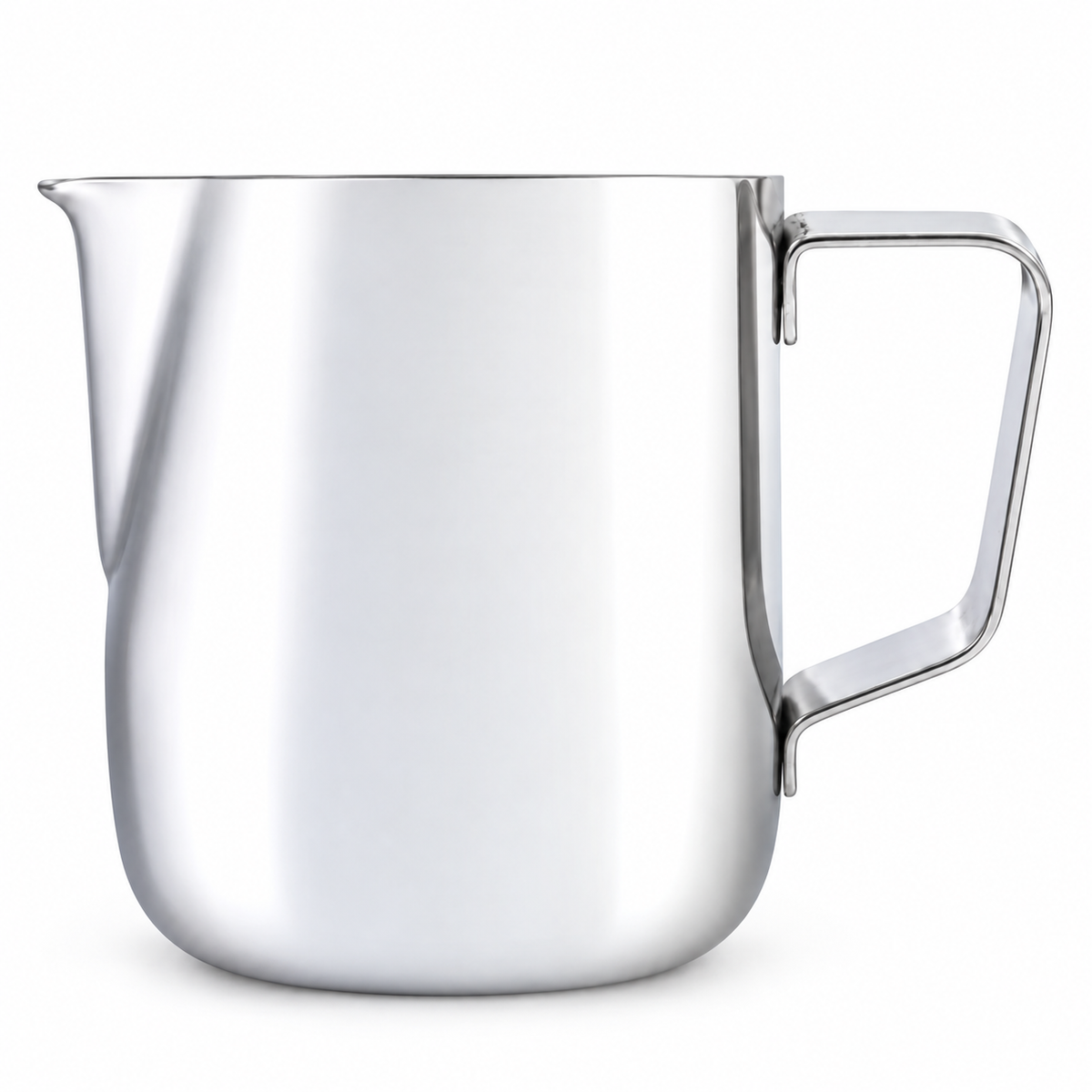


Barista Progear Stainless Steel Milk Jug


Rhino Professional Milk Frothing Jug



How to choose a milk frothing jug
A milk jug, or milk pitcher, is where the texture happens: the steam wand stretches and heats the milk, and the jug's shape and spout decide how well it pours. Choose by three things in order: the size of the drinks you make, how much time you want while you stretch the milk, and how the jug feels in your hand when you pour.
Pick a jug size for your drinks
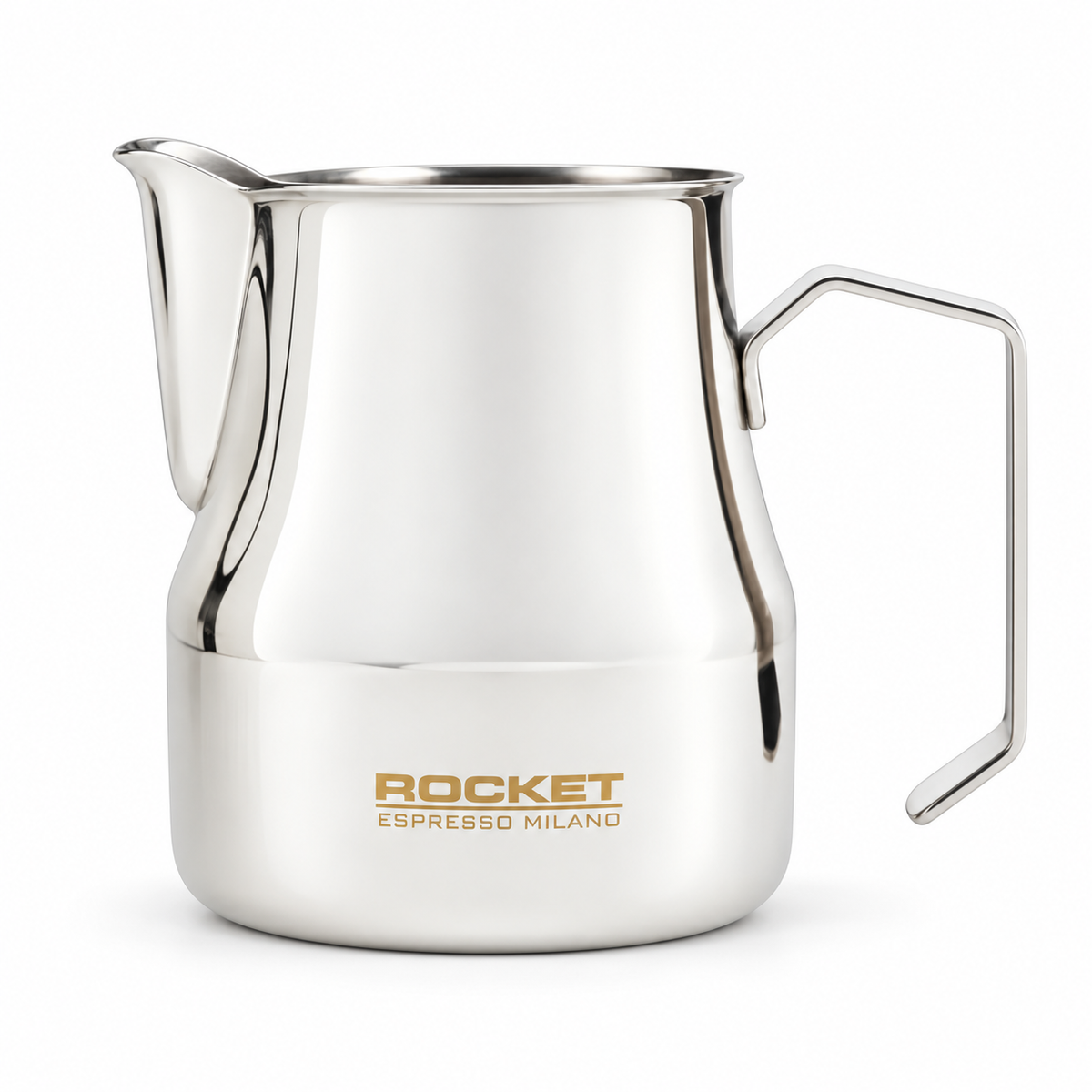
Use a smaller jug when you steam for one cup and a larger one for two cups or a big latte, and fill it to about halfway so the milk has room to grow as you stretch it. The Rocket milk jug comes in 350 ml and 500 ml, the Rhino Professional milk frothing jug in 360 ml and 600 ml, and the Barista Progear stainless steel milk jug in 400 ml, 600 ml and 950 ml. Choose the 950 ml Barista Progear if you steam for several people at once. The Rhino and Barista Progear jugs have measurements etched on the inside in millilitres and ounces, so you can pour in only the milk you need and waste less. Treat the lines as a guide, not a measuring cup.
Stainless steel thickness: 0.7 mm or 1 mm
The Barista Progear jug is 0.7 mm food-grade stainless steel. It goes in the dishwasher and comes in three sizes, which suits a first jug or a busy household. More tools from the brand are in our Barista Progear range. The Rhino Professional is 1 mm food-grade stainless steel. Rhino says the thicker wall moves heat more slowly, which gives you more time to stretch the milk, and it gives the jug more weight: the 600 ml weighs about 296 g. Choose the Rhino if you are working on latte art and want a heavier, more professional feel in the hand.
Shape and spout for latte art
The spout controls how thin a stream you can pour. The Rhino has a professional spout designed for smooth pouring and latte art, and a comfort handle for long shifts. The Barista Progear jug has an ergonomic spout and handle shaped for balance and control. The Rocket jug is made for Rocket Espresso by Motta in the classic Italian shape, which sets up a vortex in the milk as you texture it and helps you get a consistent stretch. Choose it in polished stainless steel, matt black or white to match a machine from our Rocket Espresso range.
Milk thermometers: stop at the right temperature
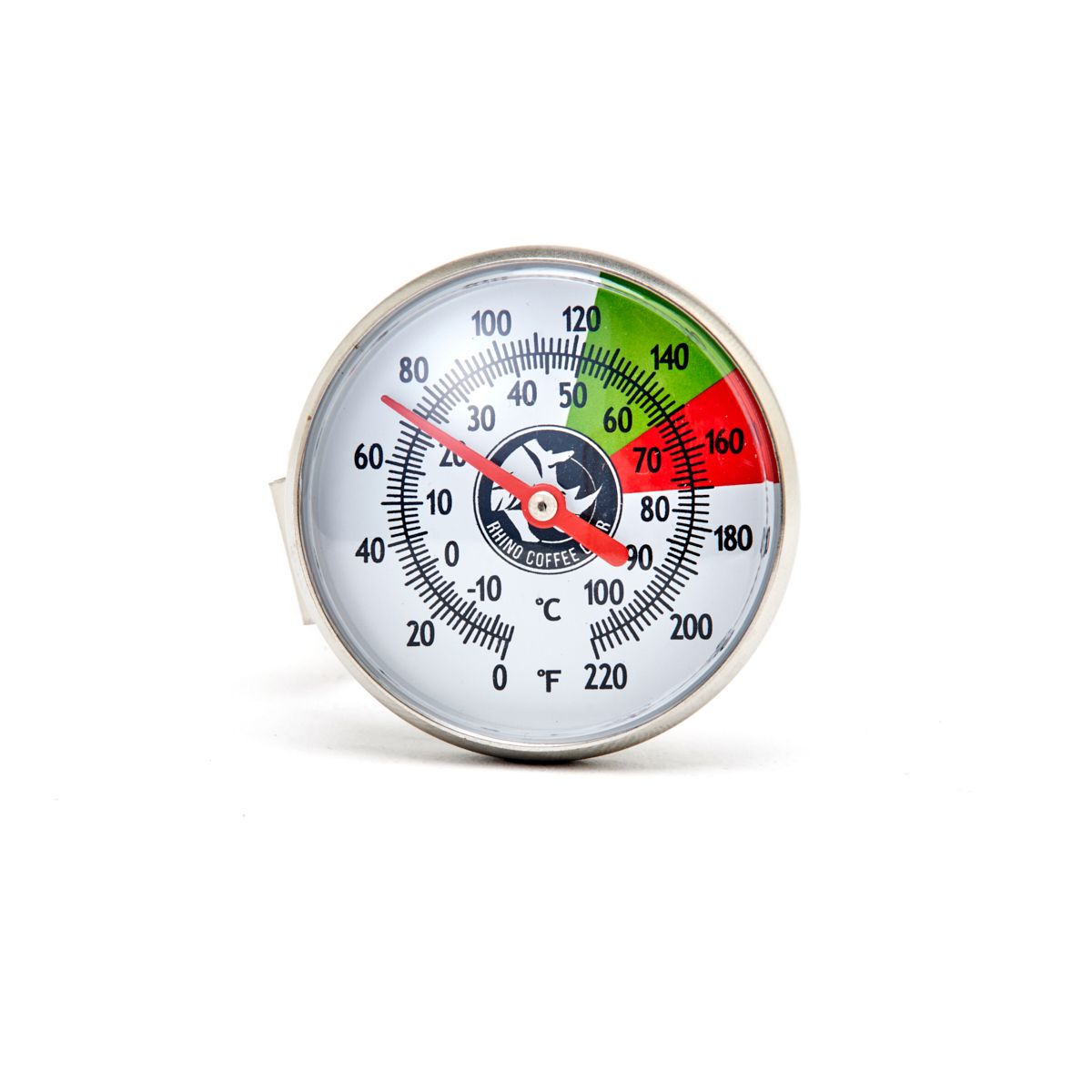
Your hand on the side of the jug will tell you when the milk is getting hot, but a thermometer tells you exactly. The Rhino short thermometer has a 13 cm stem and an easy-to-read dial, and its stainless steel clip sits on the side of any milk jug. Set the height before you pour the milk in, with the tip just above the bottom of the jug. Rhino's guide for steamed milk is 50 to 65 °C, and Rhino notes that milk keeps warming for a degree or two after you turn the wand off, so stop just short of your target. Take the clip off and the thermometer doubles as a kitchen thermometer. See the rest of the range from Rhino Coffee Gear.
Cleaning and care
Rinse the jug as soon as you've poured, before milk dries on the steel. The Barista Progear jug can go in the dishwasher. Clean the thermometer stem before and after every use, as Rhino advises, and keep it out of the oven and microwave. Wipe and purge the steam wand after each jug, and use a milk system cleaner to clear milk residue from the wand.
Delivery and advice
Orders over $200 ship free Australia-wide, and delivery under $200 is a flat $9.95. In-stock orders placed before 3pm Melbourne time are dispatched the same day. Not sure what suits your machine? Call or email us with the model and we'll help.
FAQs
What size milk jug do I need?
Match the jug to the most milk you steam at once, and fill it only to about halfway so there's room for the milk to stretch. A 350 ml Rocket or 360 ml Rhino suits one milk coffee at a time and is easier to control while you learn latte art. A 500 or 600 ml jug lets you steam for two cups or a large latte, and the 950 ml Barista Progear is for several drinks in one go.
Is a milk pitcher the same as a milk jug?
Yes. Milk pitcher, milk jug and frothing jug all mean the stainless steel jug you steam milk in under an espresso machine's wand. Rhino Coffee Gear calls the same product a Pro Milk Pitcher on its own site and a Professional Milk Frothing Jug here. What matters is the size, the steel and the spout, not the name, so compare those when you choose.
Can I buy a milk jug with a thermometer?
None of these jugs has a thermometer built in, but you can add one in seconds. The Rhino short thermometer clips onto the side of a milk jug, and the stem slides through the clip so you can set the tip just above the bottom. Fit it before you fill the jug, so it sits at the right height. Pair it with any of the jugs here, and when you're confident judging temperature by feel, take it off the clip and use it in the kitchen.
When should I stop steaming milk?
Stop a little before your target. Rhino gives 50 to 65 °C as the range for steamed milk, and says milk keeps rising a degree or two after the steam is off as the heat spreads through the jug. So if you want to serve at 60 °C, turn the wand off when the dial reads just under that. A thermometer is the easiest way to learn this, because you can see the needle catch up after you stop.
Does a thicker milk jug make better microfoam?
A thicker jug gives you more time, which helps. Rhino says the 1 mm stainless steel in its Pro jug transfers heat more slowly than thinner steel, so you get more stretch time before the milk is hot. That's useful while you learn to texture milk or pour latte art. A 0.7 mm jug like the Barista Progear heats faster and weighs less. Choose the feel you prefer in the hand.
Can milk jugs go in the dishwasher?
The Barista Progear stainless steel milk jug is dishwasher safe. Rhino and Rocket don't give dishwasher instructions for their jugs, so we suggest washing those by hand. Whichever jug you use, rinse it straight after pouring, because milk dries onto steel quickly. The Rhino thermometer should be cleaned by hand before and after every use and never left in an oven or microwave.