



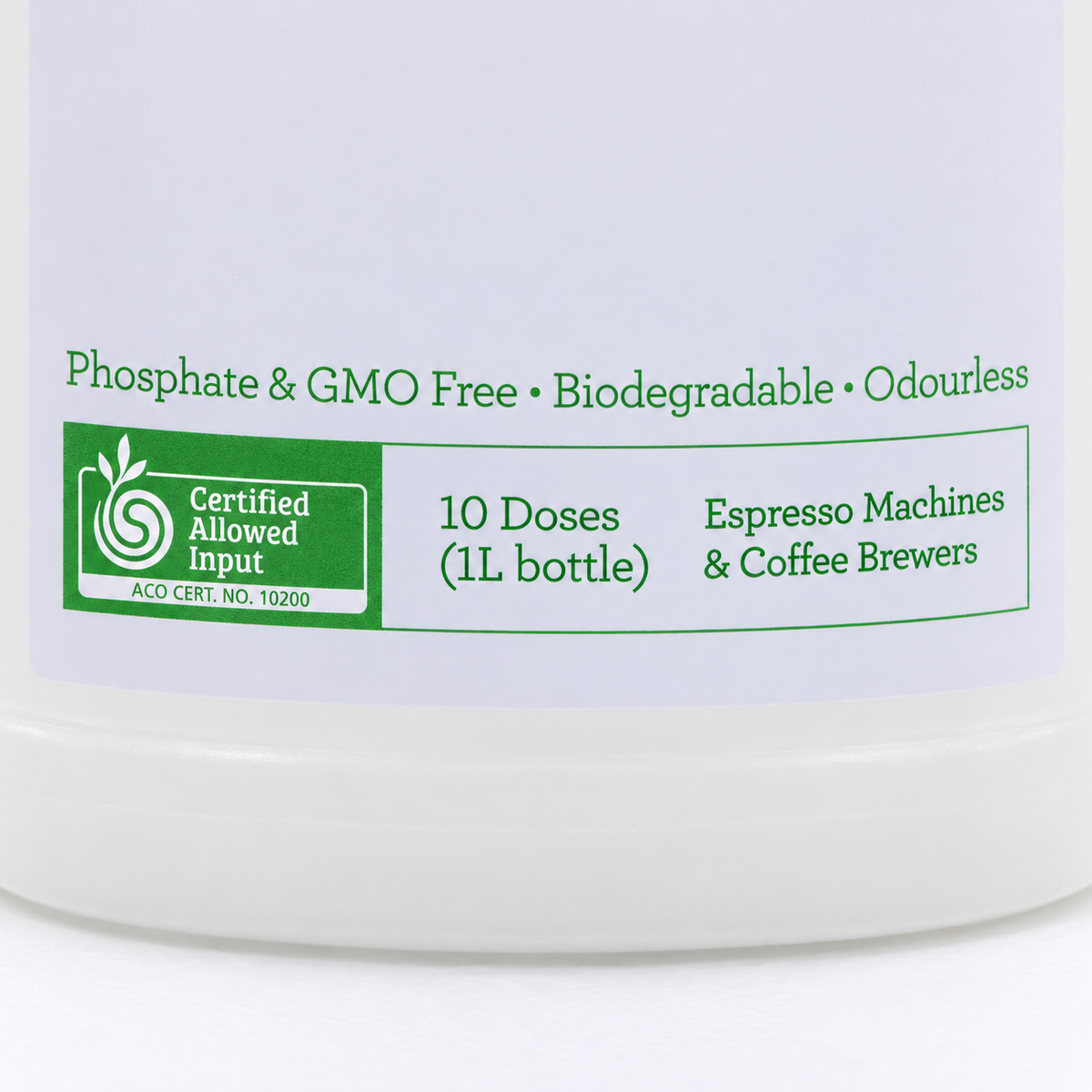


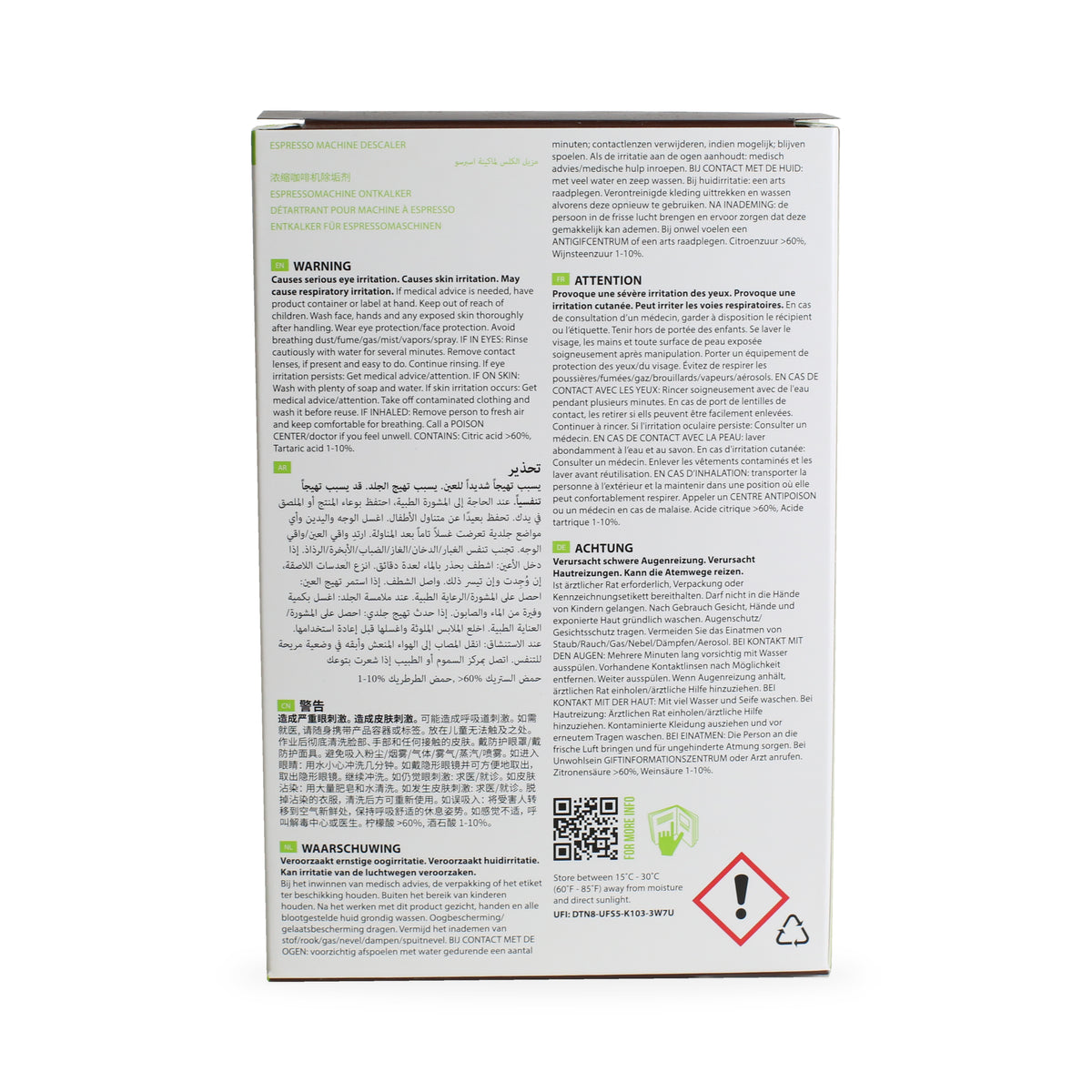


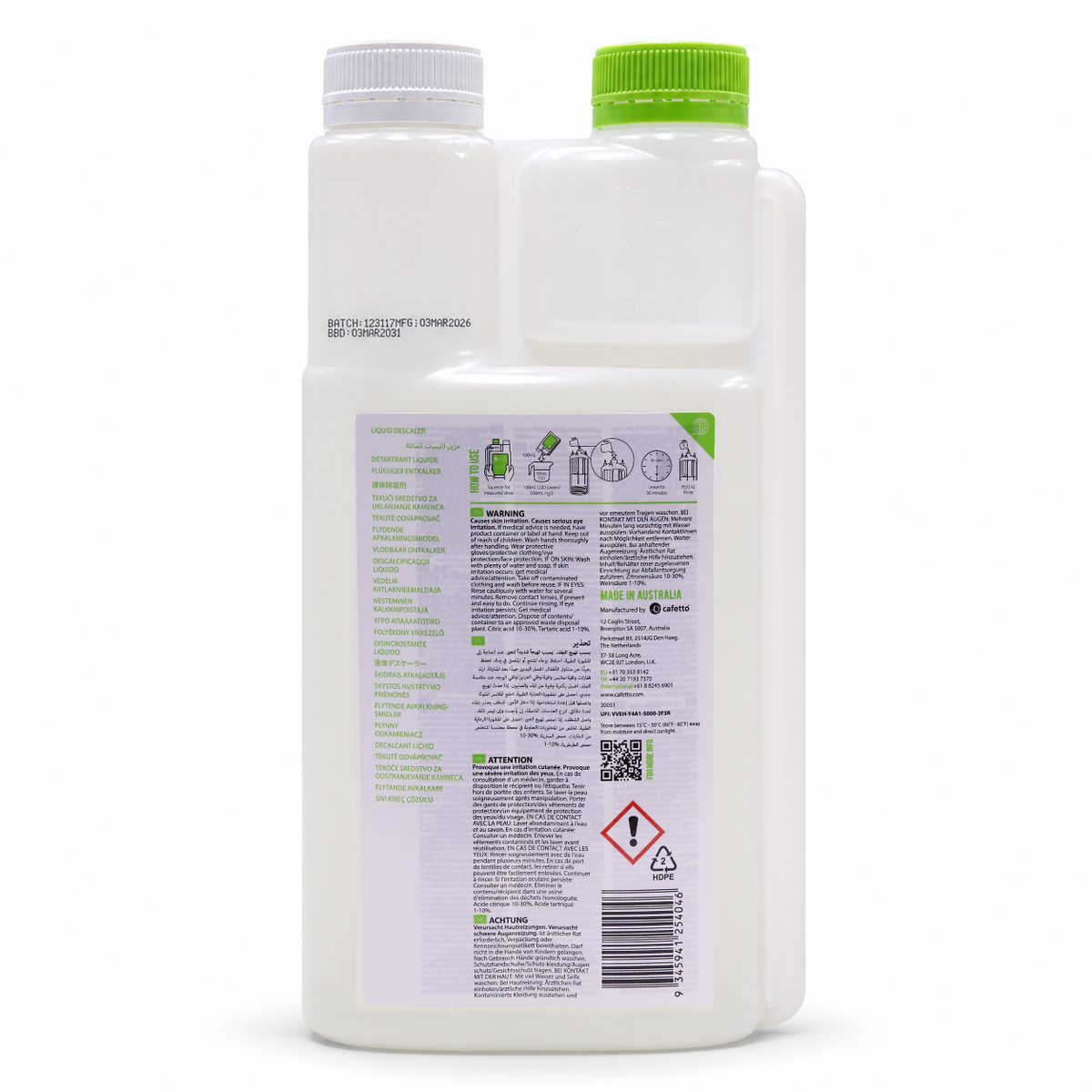
Cafetto LOD Liquid Organic Descaler 1L
How to choose a coffee machine descaler
Every time your machine heats water, minerals from hard water settle as scale in the boiler, pipes and valves. A descaler is an acid solution that dissolves that scale. Cleaning is a separate job: cleaning tablets and powders remove coffee oils from the group head and brew unit, so most machines need both a descaler and a coffee machine cleaner.
Start with your machine's manual
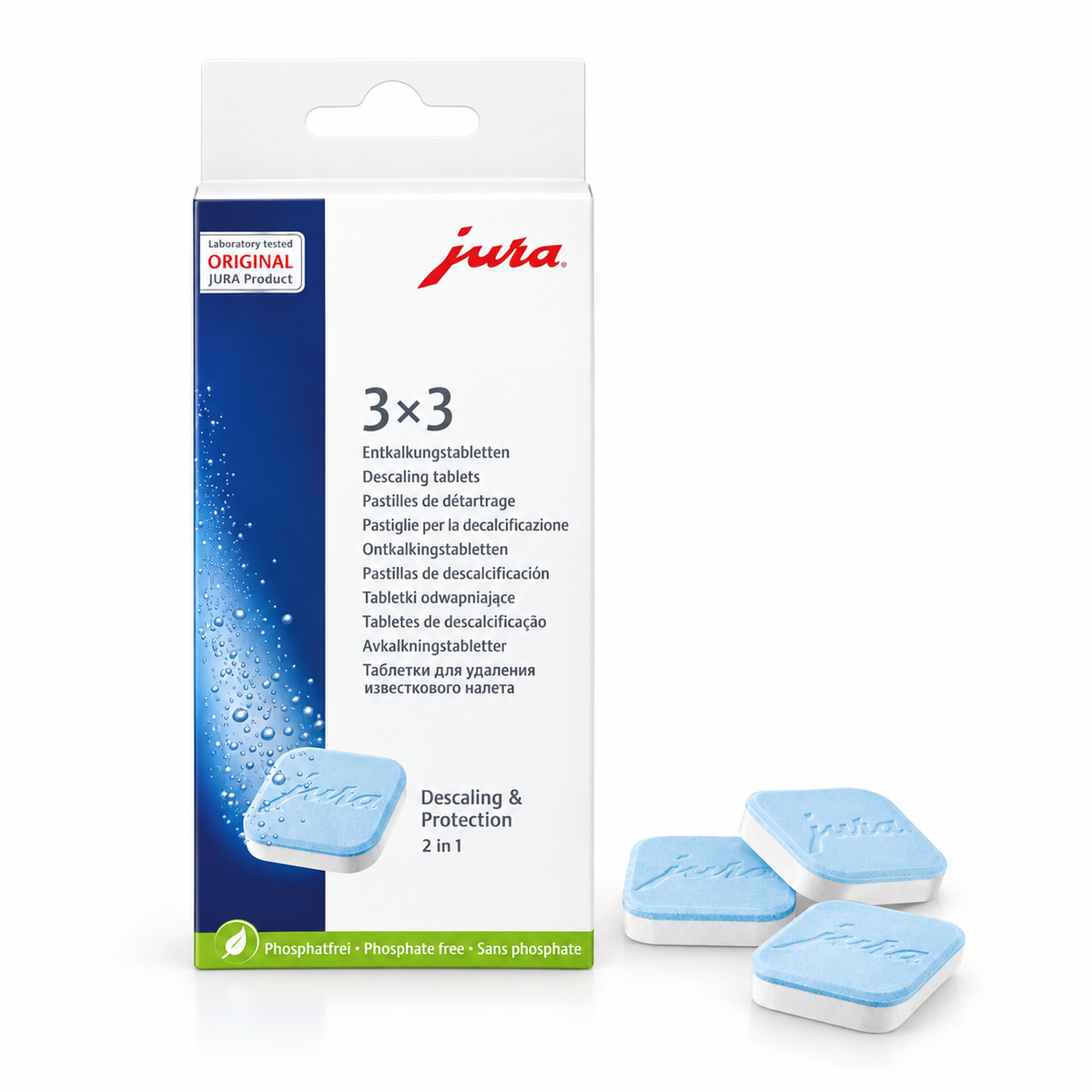
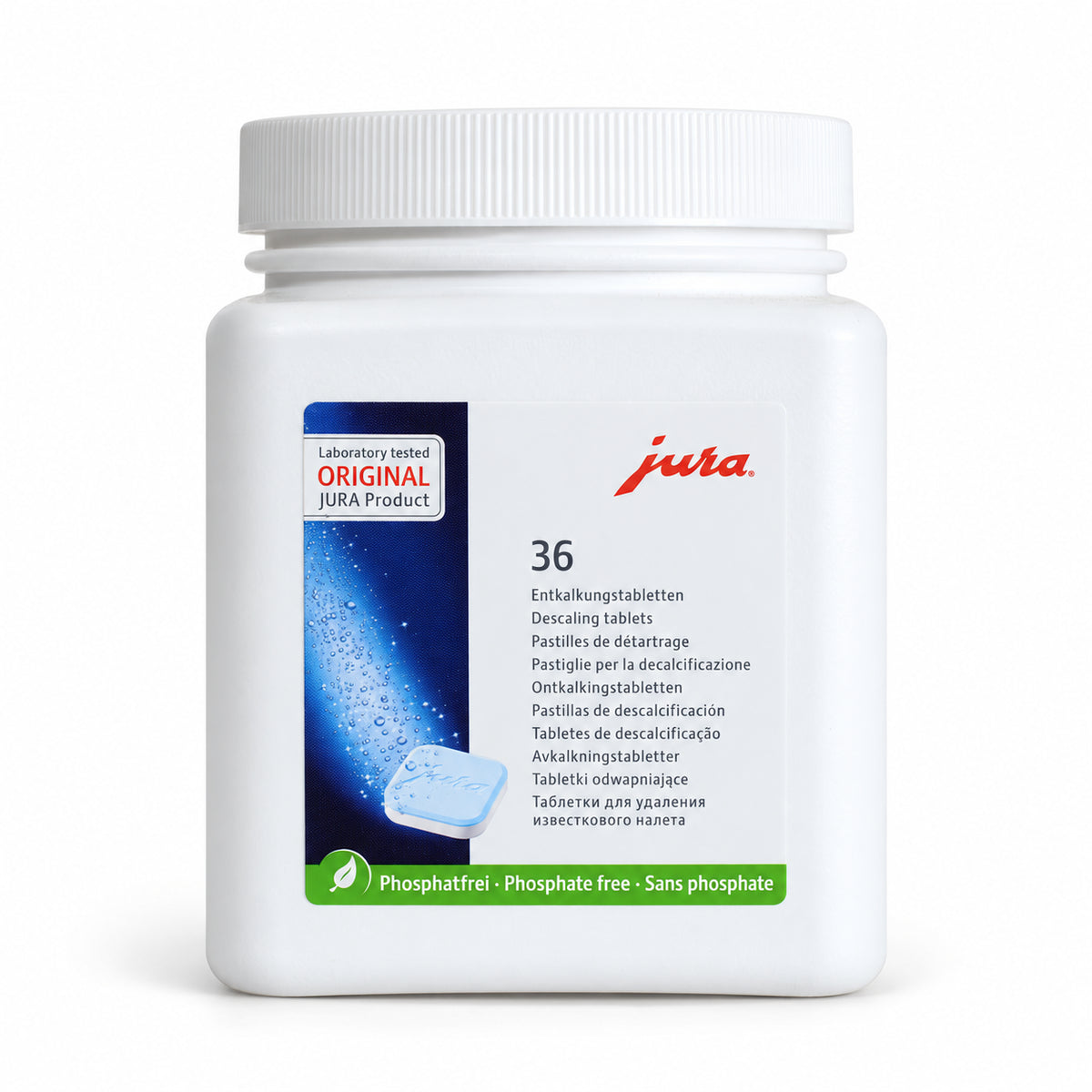
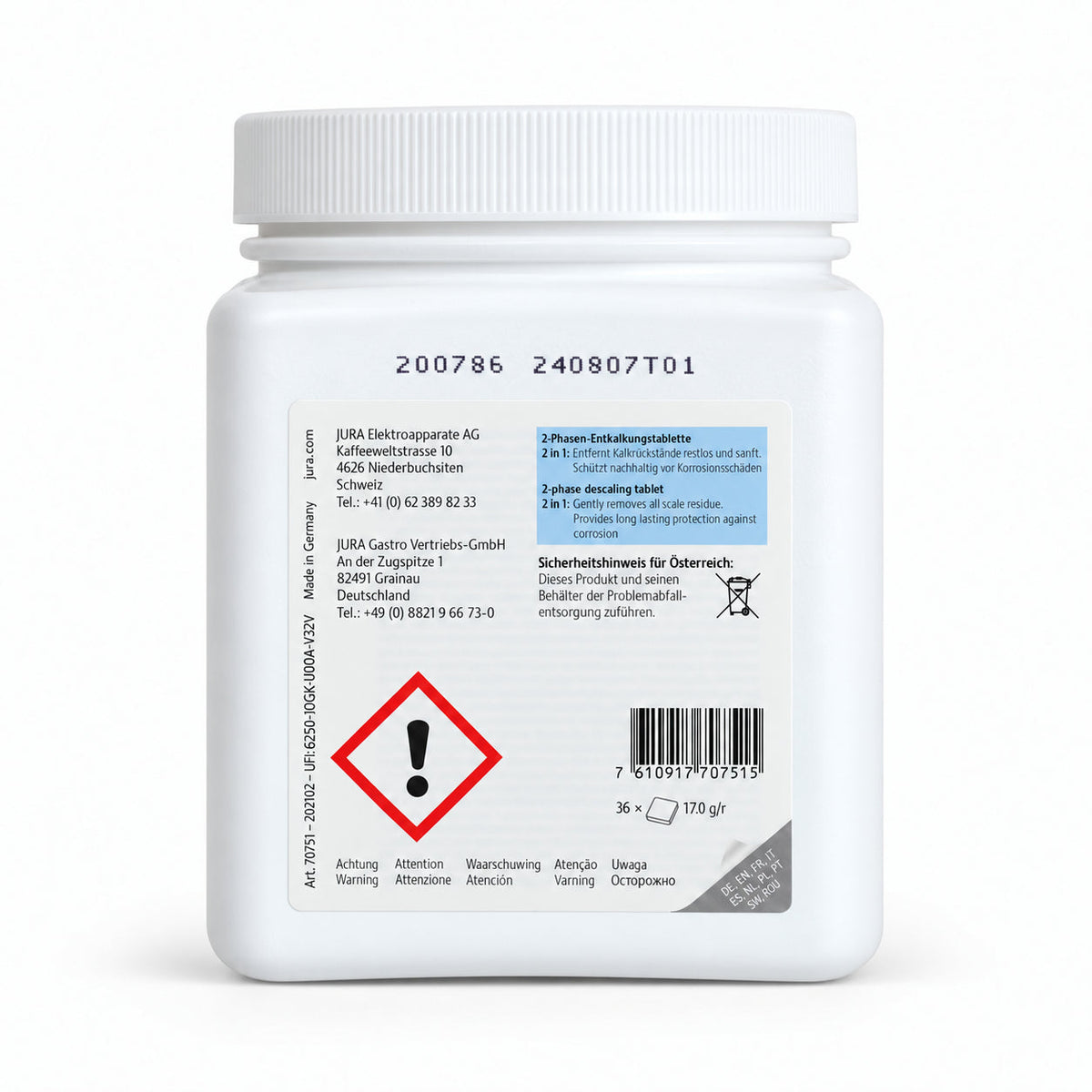
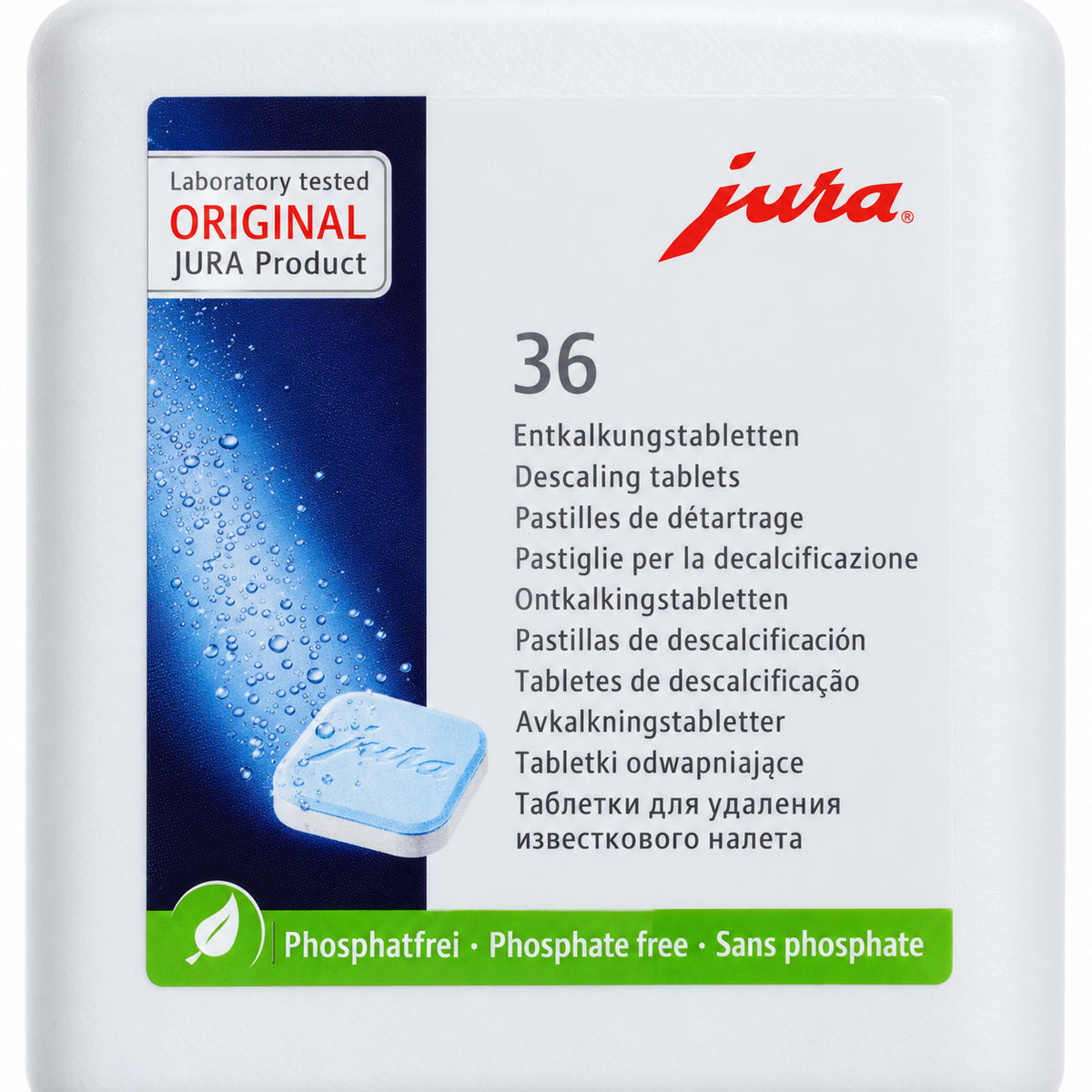
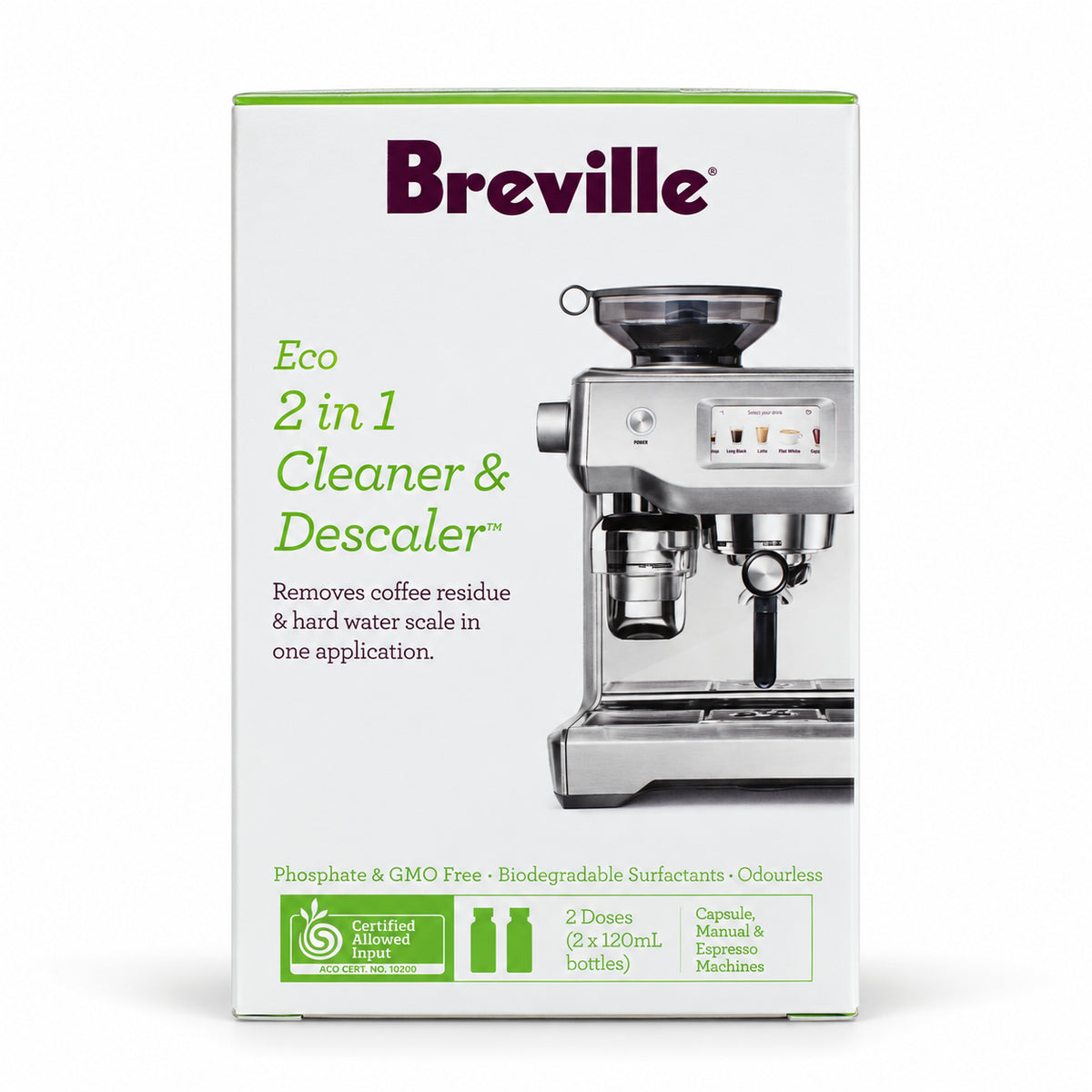
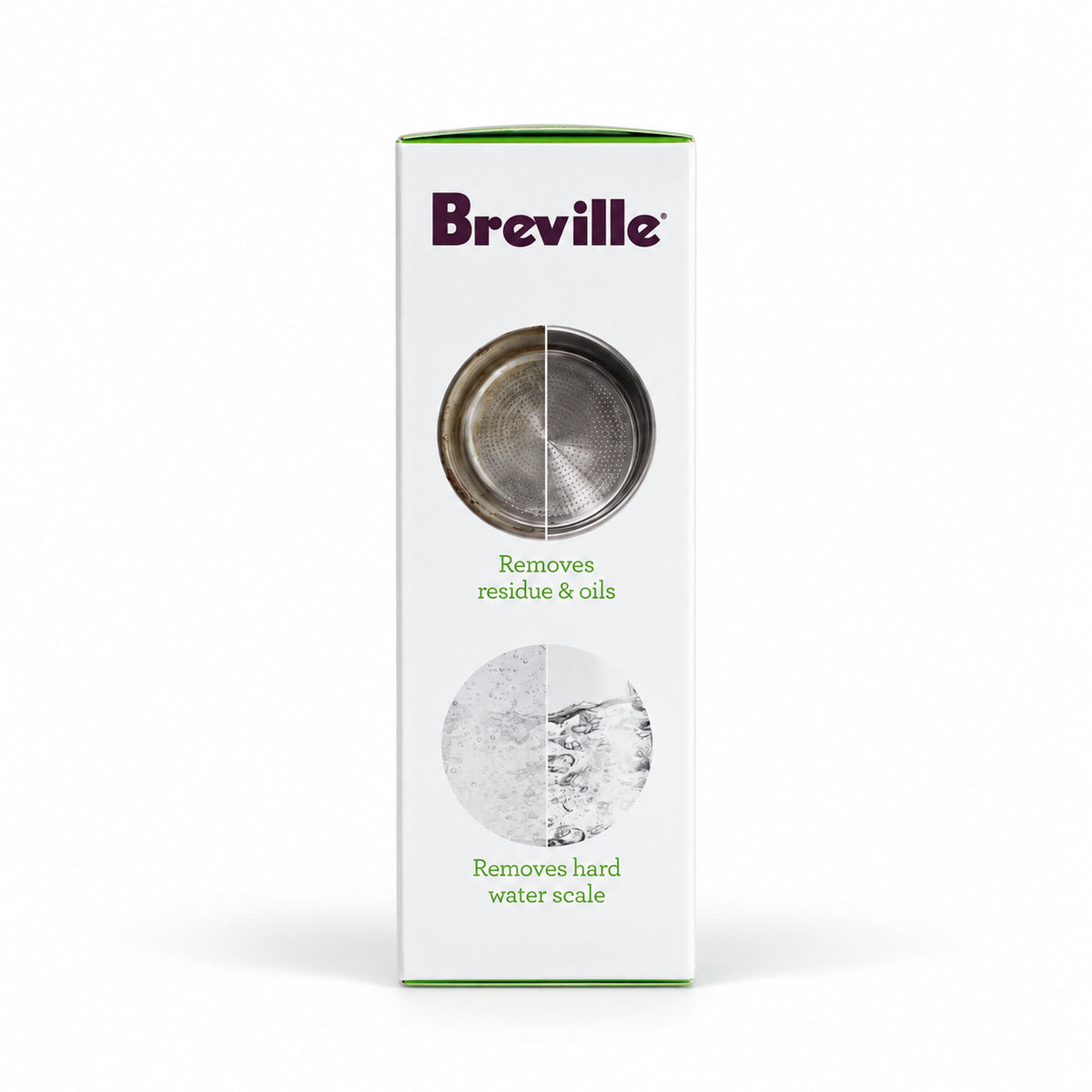
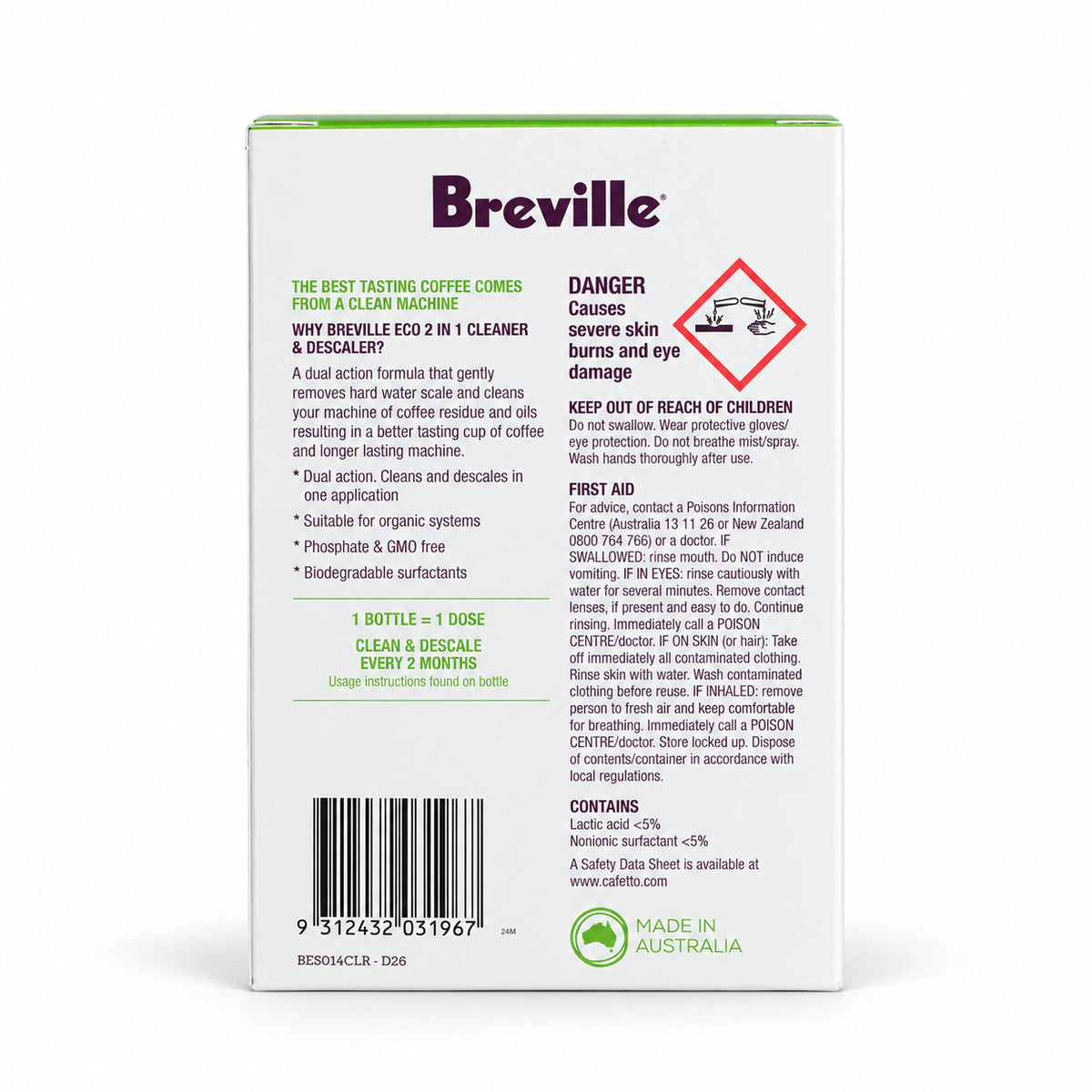
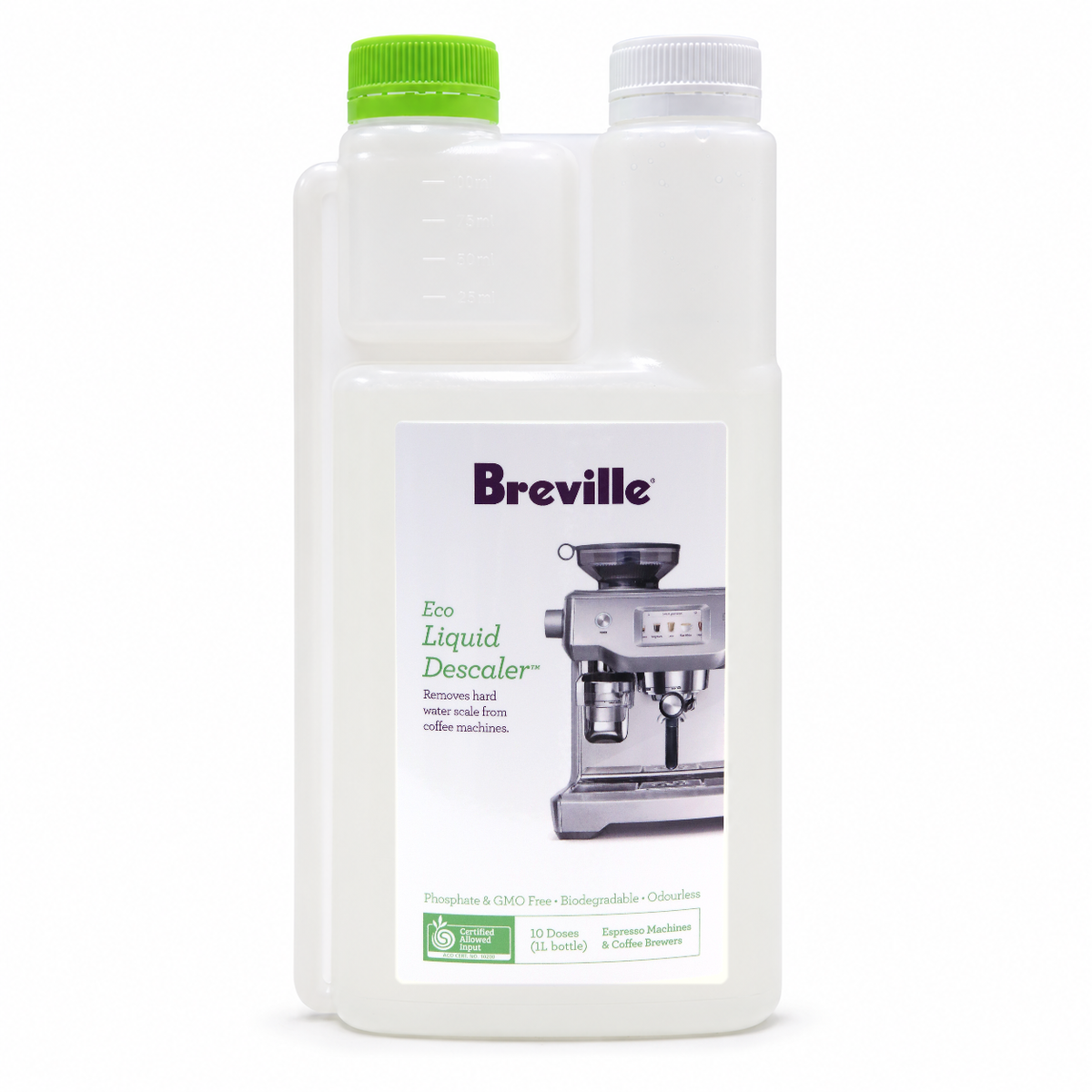
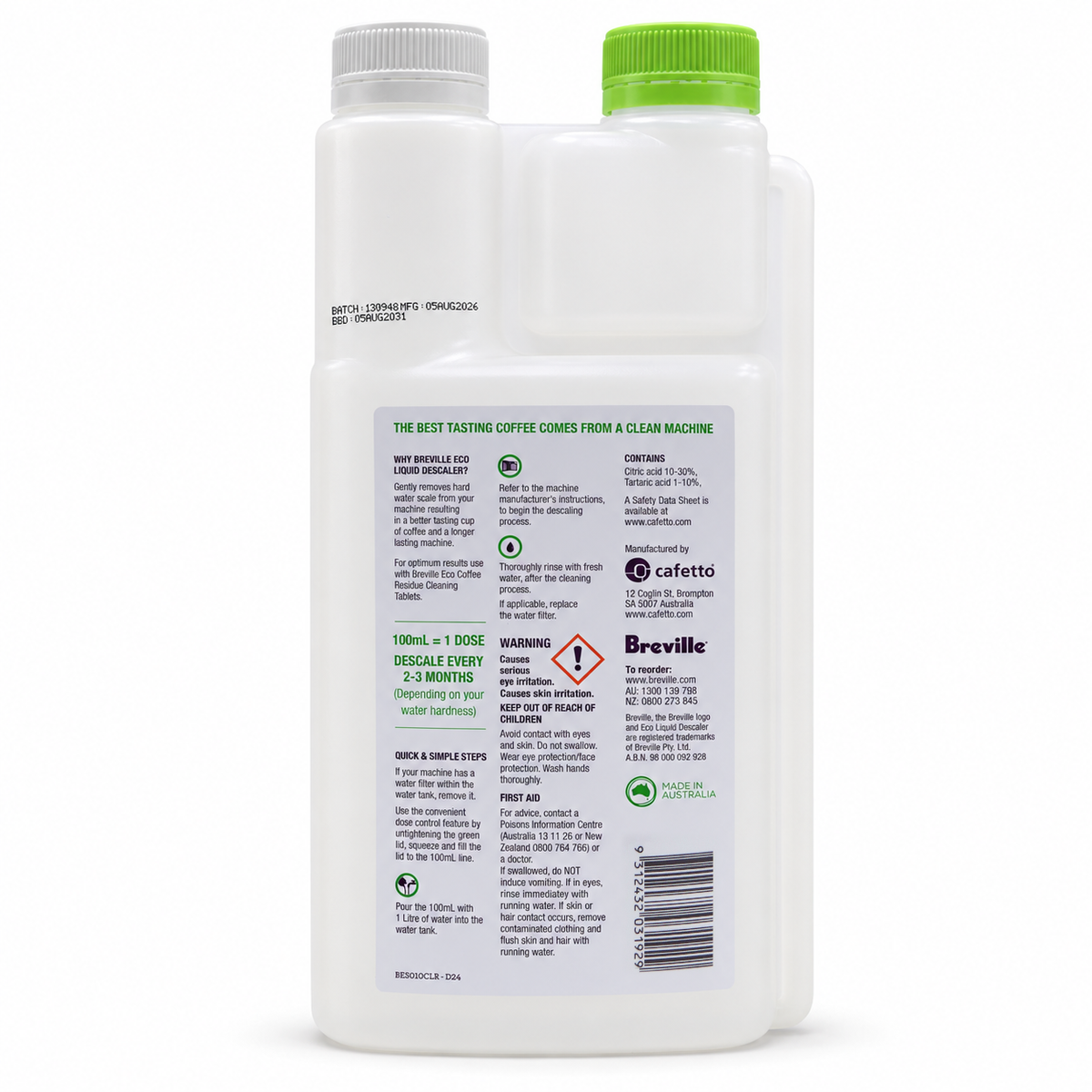
Many automatic machines run a built-in descaling programme and name the product they are designed around. If you own a Jura, the Jura Descaling Tablets 9 Pack covers three descaling cycles, and the 36 pack suits regular users. For Breville espresso machines, the Breville Eco Liquid Descaler 1 litre uses 100 mL per dose and suits both manual and automatic espresso machines. The Breville Eco 2-in-1 Cleaner & Descaler combines both jobs in one product.
Liquid, powder or tablet
- Liquid is measured and poured straight into the water tank. Our range includes Breville Eco Liquid, the Swiss-made Durgol, Cafetto LOD and Cafetto LOD Black.
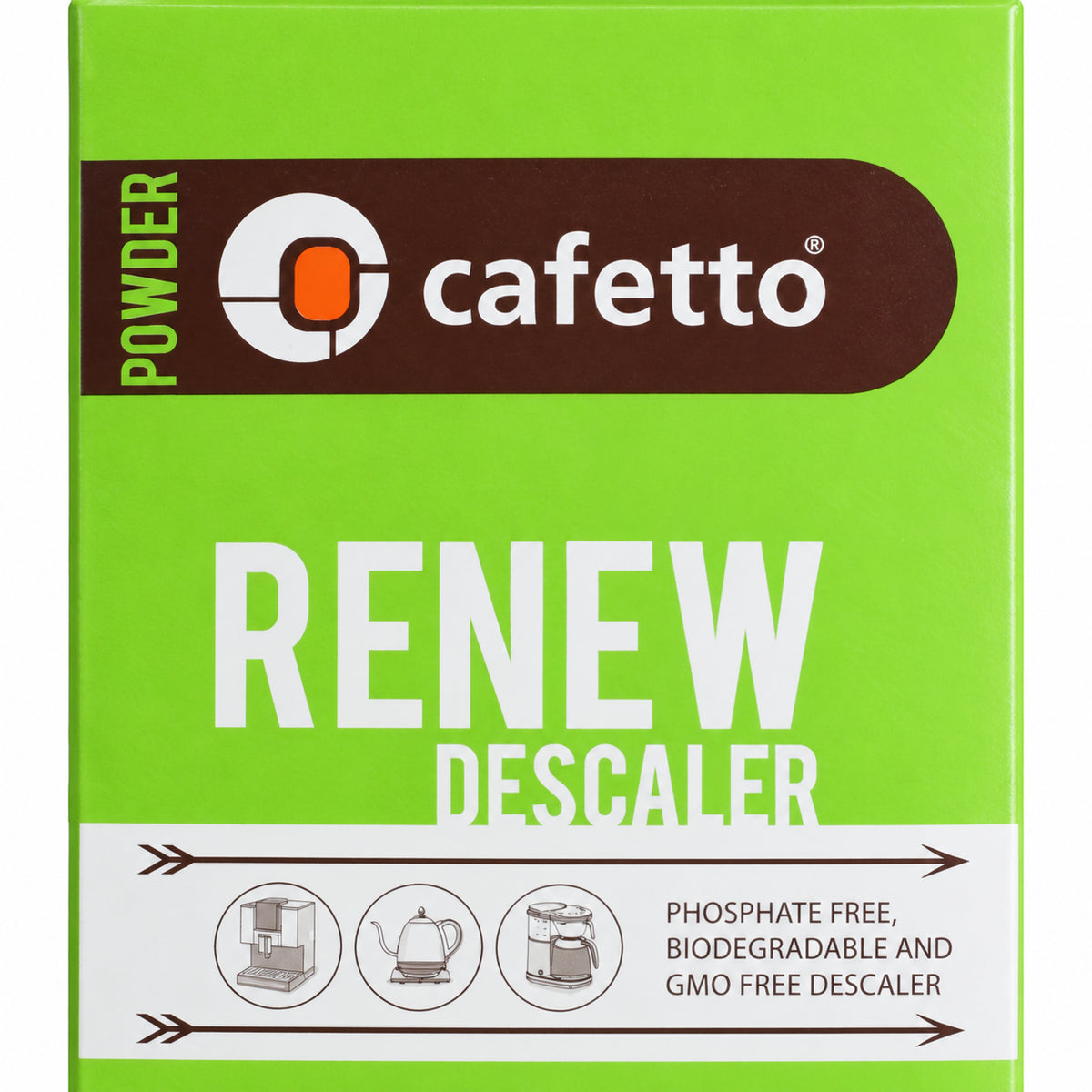
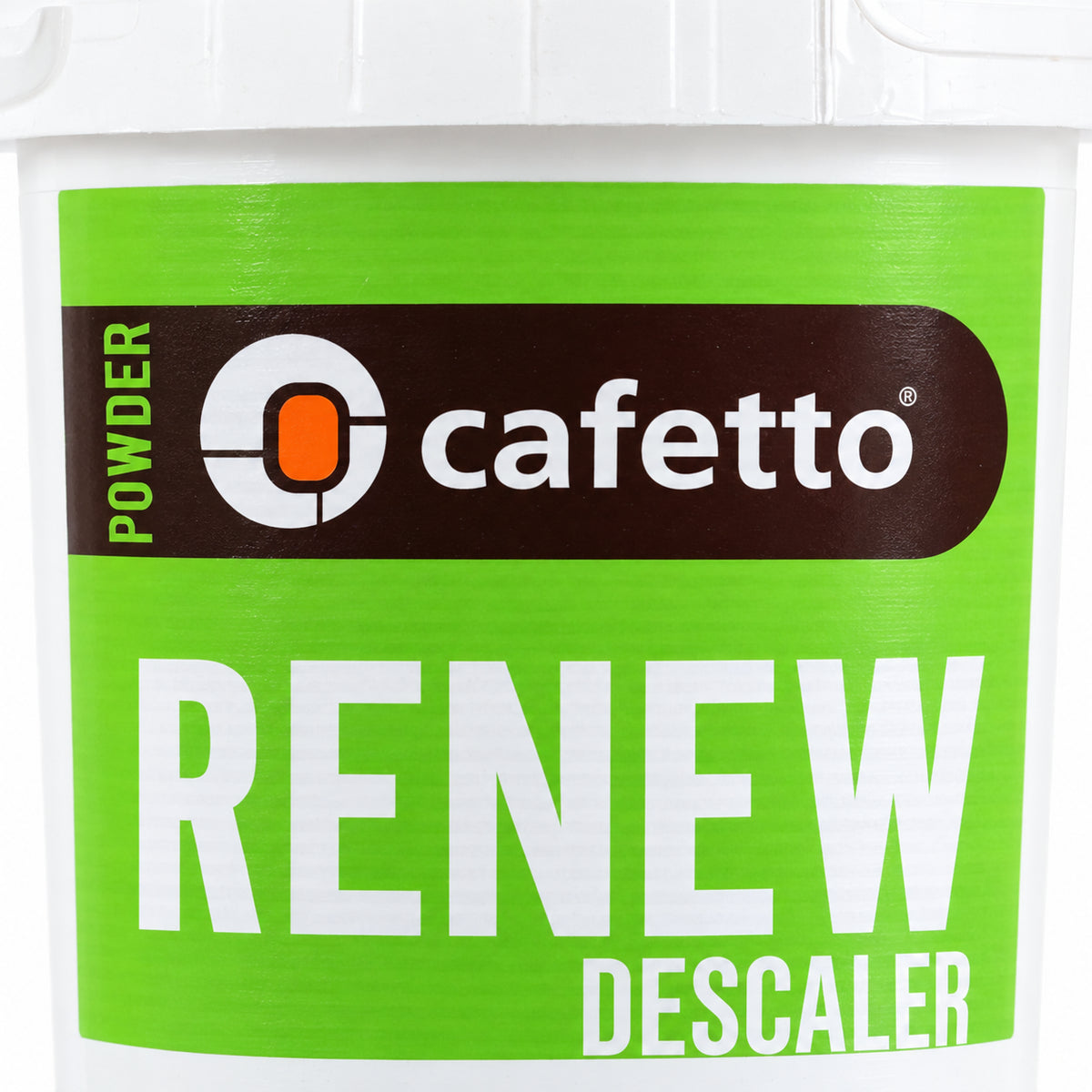
- Powder is dissolved in water first. One 25 g Cafetto Renew sachet makes 1 litre of descaling solution, and it also comes in a 6-sachet pack and a 2 kg pail.
- Tablets are pre-measured, so there is nothing to measure out. They are the format Jura uses.
Organic and gentler descalers
Cafetto Renew and Cafetto LOD Liquid Organic Descaler use a blend of organic acids and are registered by Australian Certified Organic as allowed inputs in organic systems. Both are free of phosphates and GMOs, and Cafetto rates them safe on aluminium, brass and stainless steel parts. Breville's Eco Liquid Descaler is odourless, phosphate and GMO free, and biodegradable.
Heavy scale and busy machines
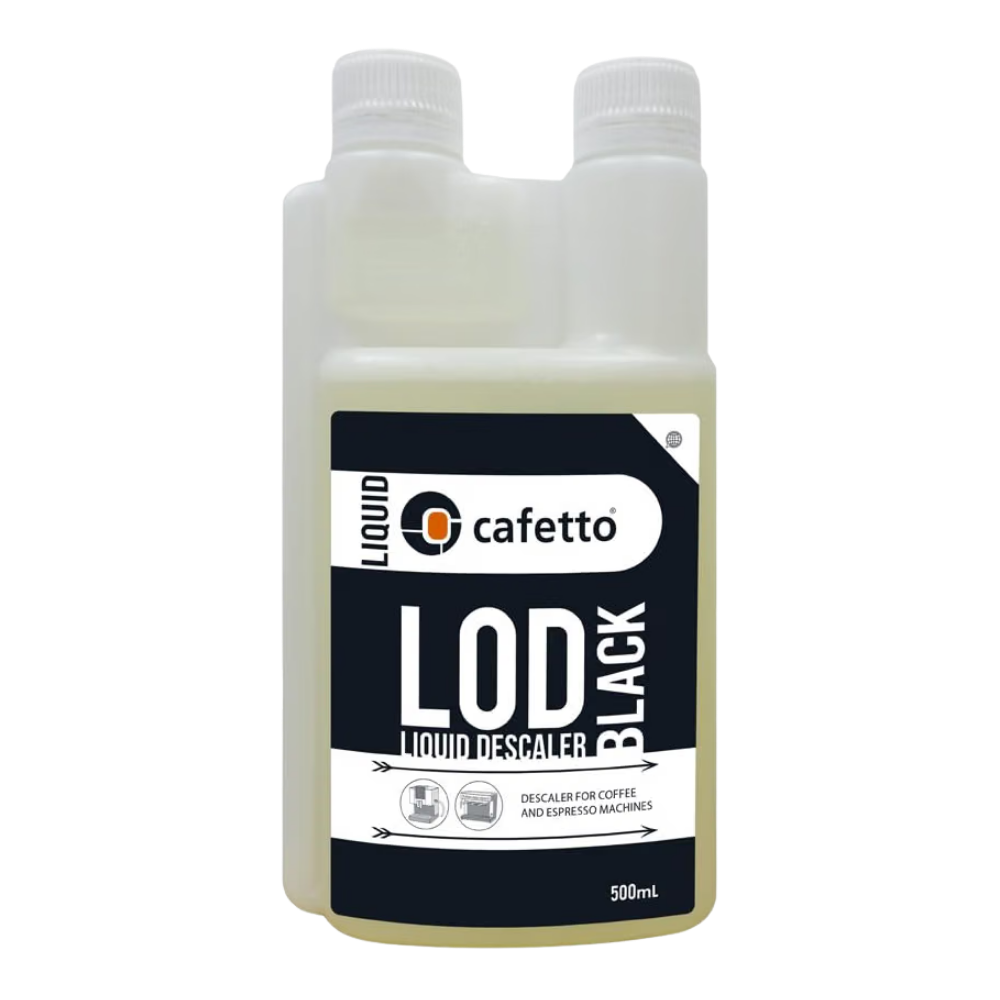
Cafetto LOD Black is a heavy-duty blend of acids for tough scale on metal surfaces that contact hot water, such as espresso machine tanks and brewing equipment. Cafetto does not recommend it for aluminium, so check your machine's materials first. For cafés and workplace machines, the Renew 2 kg pail is the economical way to descale often.
Capsule, pod and other automatic machines
Durgol is a Swiss descaler brand made by Düring AG, and its coffee machine descaler is one of the most widely used in Europe. Durgol lists it for fully automatic, capsule, pad and espresso machines, including De'Longhi, Nespresso, Jura, Saeco, Krups and WMF. One 125 mL portion goes into the tank for each descale, and it removes scale in a single pass with no soaking time.
How often to descale, and rinsing afterwards
Durgol suggests descaling about every three months, and sooner if your coffee runs slower or the pump sounds louder. Hard water means more frequent descaling. If your machine shows a descale alert, follow it. Afterwards, rinse with one or two full tanks of clean water before you make coffee. The solution coming out can be very hot, so let it cool before you pour it away.
Looking for a new machine instead? Browse our automatic and manual home coffee machines.
FAQs
How often should I descale my coffee machine?
About every three months is a common guide. Durgol recommends that interval, and sooner if coffee starts to run slowly or the machine gets louder. Hard water builds scale faster, so you may need to descale more often. Automatic machines with a descale alert will tell you when it is due, and the manual gives the interval the maker recommends.
What is the difference between descaling and cleaning a coffee machine?
Descaling removes mineral scale from the water side of the machine: the boiler, pipes and valves. Cleaning removes coffee oils and residue from the group head, brew unit and milk system. They use different products and are done on different schedules, so most machines need both. Our coffee machine cleaners cover the cleaning side.
What is a natural coffee machine descaler?
Natural descalers usually use organic acids rather than harsher mineral acids. Cafetto Renew (powder) and Cafetto LOD Liquid Organic Descaler both use a blend of organic acids. Both are registered by Australian Certified Organic as allowed inputs, and both are phosphate and GMO free. Breville's Eco Liquid Descaler is biodegradable and phosphate free. Check your manual before you switch from the maker's own descaler.
How many descales do I get from one pack?
It depends on the product. The Jura 9-pack is enough for three descaling cycles. The Breville Eco Liquid Descaler uses 100 mL per dose, so a 1 litre bottle gives about ten. One 25 g Cafetto Renew sachet makes 1 litre of solution, and Durgol uses one 125 mL portion per descale. Your machine's manual may call for a different amount.
Which descaler can I use in a De'Longhi or Nespresso machine?
Start with the manual, because some machines are set up for the maker's own descaler. Durgol lists its Swiss Espresso descaler as suitable for fully automatic, capsule, pad and espresso machines, and names De'Longhi and Nespresso among the brands. Use it with the machine's descaling programme where there is one, then rinse with one or two tanks of clean water.
Do I need to descale a Jura machine with a CLARIS filter?
Jura descaling tablets are meant for Jura machines that are not using a CLARIS water filter. The filter reduces the hardness of the water reaching the machine. If you stop using the filter, or your machine asks you to descale, use Jura Descaling Tablets with the machine's descaling programme. Three tablets cover one cycle in the 9-pack.
Can I use a coffee machine descaler in my kettle?
Some can. Cafetto says Renew suits kettles, urns and bain maries as well as espresso machines and coffee brewers. For a kettle, use one 25 g sachet in a kettle filled three-quarters full with water, then rinse well. Cafetto LOD Liquid Organic Descaler is also listed for kettles and urns. Always rinse thoroughly before you use the kettle again.